Every now and then I get the inspiration to update the links/pictures on the right of this page. Since I rarely even get the inspiration to post something, I figure making changes ought to be celebrated, no matter how small. So, I organized my links slightly differently. I start with blogs of people I know, but now have alphabetized them by first name (a couple of you may not have known I even read your blog), note that A-Rock's first name is actually Aarik, hence being first in my list..
From there I separate my links into 2 more categories: sites I quasi-regularly visit regarding Christianity or theology (this is broadly speaking, admittedly) and other sites I visit that don't fall under either of the other 2 categories. The first of these are in no particular order, the second in alphabetical order. Why am I not consistenly in my alphabetizing? Because this is my site and I'll do what I want, that's why. I'm assuming I don't have to say this, but just because I link to something doesn't mean I wholeheartedly endorse everything (or anything, for that matter) those sites contain. It just means I find them interesting enough to read.
I also try to update the pictures of books I'm reading and cds I'm listening to every few months or so. The books are fairly up to date, and at some point I really want post some thoughts on the "How to Read the Bible..." books now that I've used them in teaching for the last year. The cds are somewhat up to date. Truth be told, I don't listen to nearly as much music as I used to, largely because I rarely have time to sit down and listen anymore. I've added "Whole 'Nother Deal", "Photographs", and "Jazzy Jeff & the Fresh Prince Greatest Hits" to the list, which have been my companions on the car lately. That's right, DJ Jazzy Jeff and the Fresh Prince have made my cd rotation. You'd have to understand that I go way back with these guys. It's not so much the music as it is the trip down memory lane that I appreciate. A little nostalgia is good for the soul.
At any rate, there you go. I keep hoping I'll post more, but you know how that goes. This is, however, my second post of the day, even if this one doesn't really count. Small victories, my friends, small victories.
Saturday, July 28, 2007

ah, preseason football
In a city like Boston, offseason sports talk can be just as exciting as regular season sports talk. This is especially true for the Red Sox and the Patriots. Baseball may end in October, but that doesn't stop everyone from calling in radio shows and making ridiculous trade proposals or predicting how the Sox will dominate/flop. In fact, the love for speculation has grown so powerful that I heard a guy call up a popular radio show the other day and offer thoughts on next year's pitching rotation! It's July, the Sox have a 7.5 game lead over the Yankees, we have the potential to win another World Series, and some local yokel is worrying about who is going to be our number 5 starter next season! Ah, Boston.
While the Sox normally dominate offseason speculation, the Patriots are giving them a good run for their money this time around, and for good reason. The Pats were one 1st down away from making another trip to the Super Bowl. They had no receiver who could make a defense pay for leaving them in single coverage. They didn't have a linebacker who could stop a run up the middle or provide coverage in the middle of the field (poor Tedy Bruschi has lost a step or two). They had obvious holes, but still they were this close to going to the Super Bowl (and probably winning it).
So, the Pats made a splash this offseason. For receivers, they added Wes Welker, Dante Stallworth and Randy Moss. Welker is the speedy slot receiver, the kind of guy Tom Brady loves. Stallworth and Moss give them legitimate downfield threats. All 3 of these guys are upgrades from anyone they had last year. So, on paper, they seem to have advanced significantly.
Here are the potential problems: Stallworth has a history of substance abuse problems. Moss has a history of not trying hard in practice or in the game. These are not typical Patriots guys. Patriots guys are like Bruschi or Vrabel. They are "less talented" players who have worked their butts off to learn the most difficult system in football and give up their personal stats for the sake of winning. Stallworth may be okay, but Moss is the biggest concern. He may be the most physically talented receiver in the history of football, and that's not an exaggeration. But he doesn't care. In the Patriots offense, it's unlikely he will catch more than 70 passes, and I'm not sure it'll be that many. I think Welker may end up with more catches in this offense. Will Moss survive the season not being the center of Brady's attention? As I heard someone say this week, "Brady's favorite receiver is whoever's open." He won't take a chance 50 yards downfield if there's someone open over the middle. How will Moss feel about that?
At linebacker, they added Adalius Thomas, one of the most versatile linebackers in the league. This guy, at least from a physical attribute standpoint, is a classic Belichick guy. Belichick loves guys who can play multiple roles (Troy Brown, Mike Vrabel, Richard Seymour), and Thomas has more raw skills (strength, speed) than any other linebacker they have. The questions are: can he learn the system and will he pass up personal glory for the sake of the team? I don't know enough about him to offer up an opinion, but I will be watching.
So on paper this team looks like it should go to the Super Bowl. In fact, most experts have written their name down in ink rather than pencil, which is enough to make me worried. As a Boston sports fan, it's in my nature to downplay my team's chances so as not to be disappointed. But the truth is this team should go to the Super Bowl. We have the best coach, the best quarterback (who now has weapons), the best defensive line, an improved linebacking core, and so on. All this for a team that was one 1st down away from going to the Super Bowl. But training camp will tell us a lot. Will Moss even get through (I'm not convinced he will, I wouldn't be surprised to see him get cut at the first sign of trouble). Will the new additions mesh well with the veterans? It makes preseason a lot of fun (but not quite as much fun as the real thing).
While the Sox normally dominate offseason speculation, the Patriots are giving them a good run for their money this time around, and for good reason. The Pats were one 1st down away from making another trip to the Super Bowl. They had no receiver who could make a defense pay for leaving them in single coverage. They didn't have a linebacker who could stop a run up the middle or provide coverage in the middle of the field (poor Tedy Bruschi has lost a step or two). They had obvious holes, but still they were this close to going to the Super Bowl (and probably winning it).
So, the Pats made a splash this offseason. For receivers, they added Wes Welker, Dante Stallworth and Randy Moss. Welker is the speedy slot receiver, the kind of guy Tom Brady loves. Stallworth and Moss give them legitimate downfield threats. All 3 of these guys are upgrades from anyone they had last year. So, on paper, they seem to have advanced significantly.
Here are the potential problems: Stallworth has a history of substance abuse problems. Moss has a history of not trying hard in practice or in the game. These are not typical Patriots guys. Patriots guys are like Bruschi or Vrabel. They are "less talented" players who have worked their butts off to learn the most difficult system in football and give up their personal stats for the sake of winning. Stallworth may be okay, but Moss is the biggest concern. He may be the most physically talented receiver in the history of football, and that's not an exaggeration. But he doesn't care. In the Patriots offense, it's unlikely he will catch more than 70 passes, and I'm not sure it'll be that many. I think Welker may end up with more catches in this offense. Will Moss survive the season not being the center of Brady's attention? As I heard someone say this week, "Brady's favorite receiver is whoever's open." He won't take a chance 50 yards downfield if there's someone open over the middle. How will Moss feel about that?
At linebacker, they added Adalius Thomas, one of the most versatile linebackers in the league. This guy, at least from a physical attribute standpoint, is a classic Belichick guy. Belichick loves guys who can play multiple roles (Troy Brown, Mike Vrabel, Richard Seymour), and Thomas has more raw skills (strength, speed) than any other linebacker they have. The questions are: can he learn the system and will he pass up personal glory for the sake of the team? I don't know enough about him to offer up an opinion, but I will be watching.
So on paper this team looks like it should go to the Super Bowl. In fact, most experts have written their name down in ink rather than pencil, which is enough to make me worried. As a Boston sports fan, it's in my nature to downplay my team's chances so as not to be disappointed. But the truth is this team should go to the Super Bowl. We have the best coach, the best quarterback (who now has weapons), the best defensive line, an improved linebacking core, and so on. All this for a team that was one 1st down away from going to the Super Bowl. But training camp will tell us a lot. Will Moss even get through (I'm not convinced he will, I wouldn't be surprised to see him get cut at the first sign of trouble). Will the new additions mesh well with the veterans? It makes preseason a lot of fun (but not quite as much fun as the real thing).
Friday, July 13, 2007
Red Sox midseason report
So we're coming off the All-Star break with the Sox leading Toronto and New York by 10 games in the AL East. So am I worried? Of course, but for more than the typical "I'm a Sox fan and I'm always worried" reasons, although that's true enough. But despite the large lead and impressive performances, I think there is grounds for concern.
Those grounds start with the fact that this team is built to win the World Series, not just the division. If all we cared about was winning the AL East, we'll be fine. I don't think it's overconfident to say that the Sox will probably win the division. Yes, the Blue Jays are good, but they don't have the firepower in the rotation or in the lineup to overcome the Sox. The Yankees have floundered, but they have played better as of late and you know they'll have to get better. But, in all honesty, I don't think they have the pitching to pull off a comeback. Of course they could, you can't count them out, but I wouldn't bet on it.
Red Sox Nation, however, shouldn't be content with winning the division. We're passed the stage of being happy with just beating the Yankees, our payroll is too big for that. Besides, we already did that in the single greatest comeback in the history of sports in 2004. Remember when the Sox were down 3-0 against the Yankees, then Dave Roberts stole second, Bill Mueller drove him in with a clutch single off the greatest closer of all time, Mariano Rivera, and the Sox went on to beat the Yankees the next 4 games and sweep the Cardinals for their first World Series victory since 1918? Remember that? Yeah, that was awesome. (Now pause for a second and recall your favorites 2004 memories).
Anyway, so here's the deal: the Sox aren't really beating the best teams around, particularly Detroit. That scares me. There's no reason for us to be swept by the Tigers, this team is built too carefully to be able to lose like that. Yet, heading into the All-Star break, that's exactly what happened. Sure, we look great against Tampa Bay. Who cares? Unless the Devil Rays receive some special invite to the playoffs it doesn't matter.
The pitching has been great, 2nd in the AL in ERA, with the best bullpen in the game. No one can complain about it. Yet, I still find myself being a little worried. Sure, Okajima and Papelbon are the best setup-man/closer tandem in baseball. But do we have a righty out of the bullpen we can trust? Delcarmen has looked great recently, but we can't put all our stock in a 23 year old with a spotty track record for the last couple years. I love him, and I think he'll do well in the future, but for now I don't necessarily think he's our guy (though part of me hopes he is, he's a local kid making it big, gotta love that).
I've also spoken about my doubts of Curt Schilling. Yes, he almost threw a no-hitter. But then he stunk his next few starts and is now on the disabled list. He ain't a kid anymore. And Wakefield has been solid, but not great, same for Tavares (who I love, if for no other reason than his resemblance to Nosferatu, I will stand by this forever). So that leaves us with Beckett and Dice-K, which is awesome. But can we beat the Tigers with that tandem? Are they better than Verlander/Bonderman/Rogers? I'm not sure. And that worries me.
Our offense has been fairly flat. Manny and Ortiz haven't hit for power, Drew is proving to be a bust (I'd point out that I predicted that, but that wasn't exactly difficulty), Lugo can't hit any better than I can, and Coco has only recently decided to make contact with the ball. Youkilis has been phenomenal, so has Pedroia (after a horrific start), Lowell and Varitek have both been solid. All this to say, this is the area of need. They may not have to make a deal, that is, if Manny and Ortiz step it up. That would be enough. On paper this is a great offense, but they just haven't worked out so far. I'd rather not have to make a deal, since I don't want to see any prospects go.
So here's where I stand. We are actually the 2nd best team in the AL, behind Detroit. If Manny and Ortiz, particularly Manny, step up with the production (Ortiz has a decent average, but his power numbers are way down), we may not have to trade a prospect for another bat. We may need to make a deal for another starter if Schilling doesn't come back. Sigh. I hate it. My favorite team in the whole world is dominating their division and I'm still looking over my shoulder. 86 years is hard to overcome...
Those grounds start with the fact that this team is built to win the World Series, not just the division. If all we cared about was winning the AL East, we'll be fine. I don't think it's overconfident to say that the Sox will probably win the division. Yes, the Blue Jays are good, but they don't have the firepower in the rotation or in the lineup to overcome the Sox. The Yankees have floundered, but they have played better as of late and you know they'll have to get better. But, in all honesty, I don't think they have the pitching to pull off a comeback. Of course they could, you can't count them out, but I wouldn't bet on it.
Red Sox Nation, however, shouldn't be content with winning the division. We're passed the stage of being happy with just beating the Yankees, our payroll is too big for that. Besides, we already did that in the single greatest comeback in the history of sports in 2004. Remember when the Sox were down 3-0 against the Yankees, then Dave Roberts stole second, Bill Mueller drove him in with a clutch single off the greatest closer of all time, Mariano Rivera, and the Sox went on to beat the Yankees the next 4 games and sweep the Cardinals for their first World Series victory since 1918? Remember that? Yeah, that was awesome. (Now pause for a second and recall your favorites 2004 memories).
Anyway, so here's the deal: the Sox aren't really beating the best teams around, particularly Detroit. That scares me. There's no reason for us to be swept by the Tigers, this team is built too carefully to be able to lose like that. Yet, heading into the All-Star break, that's exactly what happened. Sure, we look great against Tampa Bay. Who cares? Unless the Devil Rays receive some special invite to the playoffs it doesn't matter.
The pitching has been great, 2nd in the AL in ERA, with the best bullpen in the game. No one can complain about it. Yet, I still find myself being a little worried. Sure, Okajima and Papelbon are the best setup-man/closer tandem in baseball. But do we have a righty out of the bullpen we can trust? Delcarmen has looked great recently, but we can't put all our stock in a 23 year old with a spotty track record for the last couple years. I love him, and I think he'll do well in the future, but for now I don't necessarily think he's our guy (though part of me hopes he is, he's a local kid making it big, gotta love that).
I've also spoken about my doubts of Curt Schilling. Yes, he almost threw a no-hitter. But then he stunk his next few starts and is now on the disabled list. He ain't a kid anymore. And Wakefield has been solid, but not great, same for Tavares (who I love, if for no other reason than his resemblance to Nosferatu, I will stand by this forever). So that leaves us with Beckett and Dice-K, which is awesome. But can we beat the Tigers with that tandem? Are they better than Verlander/Bonderman/Rogers? I'm not sure. And that worries me.
Our offense has been fairly flat. Manny and Ortiz haven't hit for power, Drew is proving to be a bust (I'd point out that I predicted that, but that wasn't exactly difficulty), Lugo can't hit any better than I can, and Coco has only recently decided to make contact with the ball. Youkilis has been phenomenal, so has Pedroia (after a horrific start), Lowell and Varitek have both been solid. All this to say, this is the area of need. They may not have to make a deal, that is, if Manny and Ortiz step it up. That would be enough. On paper this is a great offense, but they just haven't worked out so far. I'd rather not have to make a deal, since I don't want to see any prospects go.
So here's where I stand. We are actually the 2nd best team in the AL, behind Detroit. If Manny and Ortiz, particularly Manny, step up with the production (Ortiz has a decent average, but his power numbers are way down), we may not have to trade a prospect for another bat. We may need to make a deal for another starter if Schilling doesn't come back. Sigh. I hate it. My favorite team in the whole world is dominating their division and I'm still looking over my shoulder. 86 years is hard to overcome...
Saturday, July 07, 2007
Hymn of the Week: Rock of Ages
Has it really been 6 months since my last Hymn of the Week post? Yikes! A few weeks back we sang this hymn in church during communion time (at the request of fellow hymnophile JP). It's an 18th century hymn written by Augustus Montague Toplady in Britian. It's not necessarily one most of us sing very often or even know, but it is a terrific hymn. Check out the lyrics:
Rock of Ages, cleft for me,
Let me hide myself in Thee;
Let the water and the blood,
From Thy riven side which flowed,
Be of sin the double cure;
Save from wrath and make me pure.
Not the labour of my hands
Can fulfil Thy law’s demands;
Could my zeal no respite know,
Could my tears for ever flow,
All for sin could not atone;
Thou must save, and Thou alone.
Nothing in my hand I bring,
Simply to the cross I cling;
Naked, come to Thee for dress;
Helpless, look to Thee for grace;
Foul, I to the fountain fly;
Wash me, Saviour, else I die.
While I draw this fleeting breath,
When my eyelids close in death,
When I soar to worlds unknown,
See Thee on Thy judgement throne,
Rock of Ages, cleft for me,
Let me hide myself in Thee.
Note: the line "when my eyelids close in death" originally read "when my eyestrings break in death." I'm not sure when this line was changed, but I do have to wonder why "eyestrings" was ever a word.
You'll note how the lyrics are strongly theocentric- it places the work of salvation (presented in various metaphors and pictures) in God's hands. I've read that Toplady wrote this in response to the perceived man-centered approach of John Wesley (an assessment I disagree with). I'm quite certain that an Arminian/Wesleyan could sing this hymn without any trouble (nor more than one who is reformed singing And Can It Be).
This song, like a number of others I've mentioned, ends with an eschatological view. Many of the great hymns conclude with the hope of eternity with the Lord. I like how the hymn begins and ends with the hope of God protecting us (anyone who has heard me teach will be quick to point out that this literary device is called "inclusio") because it helps us to see that the same loving God that covers us now will continue to cover us for eternity.
One concept in this song that many may struggle with is the inadequacy of anything we can offer God. This is a song about what God has done/is doing/will do rather than what we will do. The actions that we do in this song (for example, "come to Thee", "look to Thee") are accompanied by descriptions of our inability to offer anything good on our own- "naked","helpless."
Any thoughts you'd like to share?
Rock of Ages, cleft for me,
Let me hide myself in Thee;
Let the water and the blood,
From Thy riven side which flowed,
Be of sin the double cure;
Save from wrath and make me pure.
Not the labour of my hands
Can fulfil Thy law’s demands;
Could my zeal no respite know,
Could my tears for ever flow,
All for sin could not atone;
Thou must save, and Thou alone.
Nothing in my hand I bring,
Simply to the cross I cling;
Naked, come to Thee for dress;
Helpless, look to Thee for grace;
Foul, I to the fountain fly;
Wash me, Saviour, else I die.
While I draw this fleeting breath,
When my eyelids close in death,
When I soar to worlds unknown,
See Thee on Thy judgement throne,
Rock of Ages, cleft for me,
Let me hide myself in Thee.
Note: the line "when my eyelids close in death" originally read "when my eyestrings break in death." I'm not sure when this line was changed, but I do have to wonder why "eyestrings" was ever a word.
You'll note how the lyrics are strongly theocentric- it places the work of salvation (presented in various metaphors and pictures) in God's hands. I've read that Toplady wrote this in response to the perceived man-centered approach of John Wesley (an assessment I disagree with). I'm quite certain that an Arminian/Wesleyan could sing this hymn without any trouble (nor more than one who is reformed singing And Can It Be).
This song, like a number of others I've mentioned, ends with an eschatological view. Many of the great hymns conclude with the hope of eternity with the Lord. I like how the hymn begins and ends with the hope of God protecting us (anyone who has heard me teach will be quick to point out that this literary device is called "inclusio") because it helps us to see that the same loving God that covers us now will continue to cover us for eternity.
One concept in this song that many may struggle with is the inadequacy of anything we can offer God. This is a song about what God has done/is doing/will do rather than what we will do. The actions that we do in this song (for example, "come to Thee", "look to Thee") are accompanied by descriptions of our inability to offer anything good on our own- "naked","helpless."
Any thoughts you'd like to share?
Saturday, June 30, 2007
thoughts on the Celtics draft day
No matter what happened on Thursday night, all of us Celtics fans were going to be slightly disappointed (or more than slightly) because we weren't getting one of the top 2 picks. It's even more deflating considering the Celts did everything they could in the last couple months to ensure they ended up with an awful record to help their chances in getting a top-2 pick. Alas, the ended up picking #5, which is generally really good in a deep draft like this. But, if management wants to win pronto, that pick wasn't going to help. Thus, I, like many others, felt the Celtics (with Danny Ainge at GM and Doc Rivers at head coach) would trade this pick and pick up a veteran in attempt to win soon.
And the Celtics did just that. They traded the #5 pick (Jeff Green of Georgetown), point guard Delonte West and Wally Szczerbiak to Seattle for all-star guard Ray Allen and the #35 pick (they got Big Baby Davis from LSU, a solid big man). Granted, Kevin Garnett would have been preferable to Ray Allen, but that deal wasn't going to happen on draft day. So, Ainge pulled the trigger on this deal; the question is: was it the right deal?
In assessing any deal the Celts were going to make, the number one concern for me was retaining Al Jefferson. Jefferson is one of the best young big men in the game, a soon-to-be perennial All-Star. There was plenty of trade talk regarding him, since he is one of the most coveted young players in the game, but I felt like trading him would be a panic move. In other words, Ainge and Rivers would be fearing getting fired if they don't win immediately, so they trade the future for the present. Thankfully, Jefferson is, as of right now, still a Celtic. If you're guaranteed a title by trading him, then maybe it would be okay; but that isn't likely to happen, so the best thing they could do is keep him.
So the goal was to make the team a legit contender in the East right away without giving up Jefferson. I guess the Celtics did that by getting Ray Allen. That gives them 3 legit scoring threats in Paul Pierce, Jefferson and Allen. Actually, that's more than "legit scoring threats", they are bonafide scorers. However, one of the biggest areas of concern is the lack of defense on this team, and Allen does not help in that department much at all. Then again, Szczerbiak is one of the worst defenders in the league. So, this team will score a lot of points, and they will give up a lot of points.
But they are better than they were going into the draft. I think this deal puts them somewhere around the 4-5 best team in the East. The problem is that they aren't likely to be much better than that unless they make another deal or somehow steal a great draft pick in next year's draft. This team will not contend for a title as they are presently constituted, that's all there is to it. But they are better.
Some decry this deal because of Ray Allen's age (he's turning 32 next month). For sure this has to be a concern, since most shooting guards begin to falter at about this time. Others decry this deal because of injury concerns, since Allen missed time last year due to ankle problems. I'd simply point out that he missed more time than he needed since Seattle was, just like the Celtics, attempting to lose games in order to gain a better draft pick (unlike the Celtics, they succeeded, grabbing Kevin Durant at the #2 pick).
So here is the starting lineup for next year, subject to change if they make more deals:
Point Guard- Rajon Rondo
Shooting Guard- Ray Allen
Small Forward- Paul Pierce
Power Forward- Al Jefferson
Center- Kendrick Perkins
The weakest spot here is Perkins, who is a serviceable big man, not really a center you can win a title with. The also have little help off the bench. Allan Ray (not to be confused with Ray Allen) is their best defender off the bench. If they want to go small, they could go with a combination of Rondo, Ray, Allen, Pierce and Jefferson (and that's awfully small). They don't really have a backup point guard, either, which is a shame seeing how young Rondo is. I suspect they'll make another trade, packaging Theo Ratliff, Gerald Green and some future draft pick for another veteran sometime during the season (and probably Sebastian Telfair and his gun-wielding posse, too).
All this to say, I think the Celtics made their team better. But they've locked themselves into winning with the next 2-3 years or else. If not, Pierce and Allen will be too old or gone and they're left with Jefferson and a core of mostly role players. The other option would have been to trade Paul Pierce and go completely young, like the Bulls have done (to some success). That's dangerous because you simply stockpile young players who aren't likely to win a championship in hopes that they'll stick with the teama few years down the road rather than jumping ship.
So I think this team will win about half of it's games, scoring a bunch and giving up even more, and will get bounced in the second round of the playoffs. They won't contend for an Eastern Conference title this year, but maybe the following. Of course, this is all subject to change if they make another deal, and they probably will. I give them a "B" for draft day.
And the Celtics did just that. They traded the #5 pick (Jeff Green of Georgetown), point guard Delonte West and Wally Szczerbiak to Seattle for all-star guard Ray Allen and the #35 pick (they got Big Baby Davis from LSU, a solid big man). Granted, Kevin Garnett would have been preferable to Ray Allen, but that deal wasn't going to happen on draft day. So, Ainge pulled the trigger on this deal; the question is: was it the right deal?
In assessing any deal the Celts were going to make, the number one concern for me was retaining Al Jefferson. Jefferson is one of the best young big men in the game, a soon-to-be perennial All-Star. There was plenty of trade talk regarding him, since he is one of the most coveted young players in the game, but I felt like trading him would be a panic move. In other words, Ainge and Rivers would be fearing getting fired if they don't win immediately, so they trade the future for the present. Thankfully, Jefferson is, as of right now, still a Celtic. If you're guaranteed a title by trading him, then maybe it would be okay; but that isn't likely to happen, so the best thing they could do is keep him.
So the goal was to make the team a legit contender in the East right away without giving up Jefferson. I guess the Celtics did that by getting Ray Allen. That gives them 3 legit scoring threats in Paul Pierce, Jefferson and Allen. Actually, that's more than "legit scoring threats", they are bonafide scorers. However, one of the biggest areas of concern is the lack of defense on this team, and Allen does not help in that department much at all. Then again, Szczerbiak is one of the worst defenders in the league. So, this team will score a lot of points, and they will give up a lot of points.
But they are better than they were going into the draft. I think this deal puts them somewhere around the 4-5 best team in the East. The problem is that they aren't likely to be much better than that unless they make another deal or somehow steal a great draft pick in next year's draft. This team will not contend for a title as they are presently constituted, that's all there is to it. But they are better.
Some decry this deal because of Ray Allen's age (he's turning 32 next month). For sure this has to be a concern, since most shooting guards begin to falter at about this time. Others decry this deal because of injury concerns, since Allen missed time last year due to ankle problems. I'd simply point out that he missed more time than he needed since Seattle was, just like the Celtics, attempting to lose games in order to gain a better draft pick (unlike the Celtics, they succeeded, grabbing Kevin Durant at the #2 pick).
So here is the starting lineup for next year, subject to change if they make more deals:
Point Guard- Rajon Rondo
Shooting Guard- Ray Allen
Small Forward- Paul Pierce
Power Forward- Al Jefferson
Center- Kendrick Perkins
The weakest spot here is Perkins, who is a serviceable big man, not really a center you can win a title with. The also have little help off the bench. Allan Ray (not to be confused with Ray Allen) is their best defender off the bench. If they want to go small, they could go with a combination of Rondo, Ray, Allen, Pierce and Jefferson (and that's awfully small). They don't really have a backup point guard, either, which is a shame seeing how young Rondo is. I suspect they'll make another trade, packaging Theo Ratliff, Gerald Green and some future draft pick for another veteran sometime during the season (and probably Sebastian Telfair and his gun-wielding posse, too).
All this to say, I think the Celtics made their team better. But they've locked themselves into winning with the next 2-3 years or else. If not, Pierce and Allen will be too old or gone and they're left with Jefferson and a core of mostly role players. The other option would have been to trade Paul Pierce and go completely young, like the Bulls have done (to some success). That's dangerous because you simply stockpile young players who aren't likely to win a championship in hopes that they'll stick with the teama few years down the road rather than jumping ship.
So I think this team will win about half of it's games, scoring a bunch and giving up even more, and will get bounced in the second round of the playoffs. They won't contend for an Eastern Conference title this year, but maybe the following. Of course, this is all subject to change if they make another deal, and they probably will. I give them a "B" for draft day.
Saturday, June 16, 2007
messages to the 7 churches: background info for Revelation
This past spring (I guess it's still technically spring) I had the joy/challenge of teaching 4 weeks on Revelation. I've studied Revelation on and off for a few years (took an exegesis course on it in seminary, read a few books, etc), and have come to be a firm believer that John was writing not only to give a glimpse into the end of time, but to address specific circumstances of his readers. Chapters 2-3 give us the 7 churches to whom he wrote (though many feel the number 7 here is more symbolic, which is probably true, but at the very least we can say that his audience did include these 7 churches), and I discovered some interesting background data that help us see how Christ tailored His message to them through John. Following are some notes I jotted down as I was researching, some I learned a while ago, some recently, some I probably learned a while ago and had to relearn due to my failing memory.
To the church in Ephesus (2:1-7)- I learned the least about this city, mainly because I came in with more knowledge of it. It was very important in the NT times: Timothy was stationed there when Paul wrote his letters to him, Luke dedicates an entire chapter to the events in Ephesus in Acts 19, Paul wrote a letter to Ephesus (or least the churches in that area, see the textual problem of Ephesians 1:1), and church tradition says that John lived in Ephesus later in his life, which means that his gospel and his letters may have been written for Christians there. Ephesus also would have been the first stop for John's letter carrier, so naturally it would be addressed first.
To the church in Smyrna (2:8-11)- John addresses a problem with the Jewish-Christian relations in Smyrna. It's interesting to note that around 155 AD some Jewish people of Smyrna endorsed and even assisted in the killing of one of the great early Christian martyrs, Polycarp. That's about 60 years after Revelation was written, so it seems that this could have been a lasting problem for Christians in this city. The martyrdom of Polycarp is one of my favorite non-biblical stories, you can read it here.
To the church in Pergamum (2:12-17)- Pergamum was the capital of Asia at this time, and was the center of Emperor worship in this region, hence John calling this place "where Satan has his throne." It also had a large altar to Zeus, which I read was about 120 feet by 112 feet, which seems ridiculously huge. It's easy to see how this could be considered the home of Satan. Regarding the promise of a "white stone with a new name written on it", I read that in some places, when a person was found guilty of a crime they were given a black stone, but when found innocent, they were given a white stone. This may have been in mind here.
To the church in Thyatira (2:18-29)- This seems to have been the least important and least exciting of the 7 churches. It was a city of merchants, though the various metal workers present there may explain the emphasis on "burnished bronze" in v18 and the "iron scepter" of v27. The Romans called the planet Venus the "morning star", which was a symbol of victory, which may be why Christ promises to give them in "morning star" in v28.
To the church in Sardis (3:1-6)- Christ's main message to this church is one of readiness. He tells them to "wake up!" in v2 and threatens to "come like a thief, and you will not know at what time I will come to you" (v3). What is interesting is that Sardis had a great citadel which was never taken in battle. However, it was twice overtaken by sneak attacks at night. The residents of this city knew all too well the dangers of being unprepared for what might come, Christ's message to them must have hit home.
To the church in Philadelphia (3:7-13)- My Revelation professor (Dr Sean McDonough, not related the baseball announcer of the same name) pointed out that Christ's promise to make the Philadelphians "pillars in the temple of my God" may have had special meaning to them. This city had apparently suffered bad earthquakes that caused a lot of damage to the buildings there. The promise to become part of the unshakable structure of the Lord's temple would have been particularly powerful for these believers.
To the church in Laodicea (3:14-22)- This city was home to many famous banks and medical schools, which may explain why they felt so proud of their own accomplishments (v17). Some geographical background info may also explain some often misunderstood verses. Vv15-16 are often thought to mean that Christ would rather someone be completely on fire for Him or completely against Him (hot or cold), rather than someone who wavers (lukewarm). In reality, it is much more likely that Christ chose this aquametaphor specifically for this group because of their water problems. Laodicea lacked its own good water supply. It was located in between Hierapolis, which had a hot water supply used for medicinal purposes, and Laodicea, which had a natural cold water supply used for drinking. The waters mixed near Laodicea and made lukewarm water, which was good for nothing. Jesus is speaking more about usefulness than He is the level of one's commitment towards Him. The picture of a person spitting out lukewarm water would have been familiar to a Laodicean, even if we misunderstand it.
To the church in Ephesus (2:1-7)- I learned the least about this city, mainly because I came in with more knowledge of it. It was very important in the NT times: Timothy was stationed there when Paul wrote his letters to him, Luke dedicates an entire chapter to the events in Ephesus in Acts 19, Paul wrote a letter to Ephesus (or least the churches in that area, see the textual problem of Ephesians 1:1), and church tradition says that John lived in Ephesus later in his life, which means that his gospel and his letters may have been written for Christians there. Ephesus also would have been the first stop for John's letter carrier, so naturally it would be addressed first.
To the church in Smyrna (2:8-11)- John addresses a problem with the Jewish-Christian relations in Smyrna. It's interesting to note that around 155 AD some Jewish people of Smyrna endorsed and even assisted in the killing of one of the great early Christian martyrs, Polycarp. That's about 60 years after Revelation was written, so it seems that this could have been a lasting problem for Christians in this city. The martyrdom of Polycarp is one of my favorite non-biblical stories, you can read it here.
To the church in Pergamum (2:12-17)- Pergamum was the capital of Asia at this time, and was the center of Emperor worship in this region, hence John calling this place "where Satan has his throne." It also had a large altar to Zeus, which I read was about 120 feet by 112 feet, which seems ridiculously huge. It's easy to see how this could be considered the home of Satan. Regarding the promise of a "white stone with a new name written on it", I read that in some places, when a person was found guilty of a crime they were given a black stone, but when found innocent, they were given a white stone. This may have been in mind here.
To the church in Thyatira (2:18-29)- This seems to have been the least important and least exciting of the 7 churches. It was a city of merchants, though the various metal workers present there may explain the emphasis on "burnished bronze" in v18 and the "iron scepter" of v27. The Romans called the planet Venus the "morning star", which was a symbol of victory, which may be why Christ promises to give them in "morning star" in v28.
To the church in Sardis (3:1-6)- Christ's main message to this church is one of readiness. He tells them to "wake up!" in v2 and threatens to "come like a thief, and you will not know at what time I will come to you" (v3). What is interesting is that Sardis had a great citadel which was never taken in battle. However, it was twice overtaken by sneak attacks at night. The residents of this city knew all too well the dangers of being unprepared for what might come, Christ's message to them must have hit home.
To the church in Philadelphia (3:7-13)- My Revelation professor (Dr Sean McDonough, not related the baseball announcer of the same name) pointed out that Christ's promise to make the Philadelphians "pillars in the temple of my God" may have had special meaning to them. This city had apparently suffered bad earthquakes that caused a lot of damage to the buildings there. The promise to become part of the unshakable structure of the Lord's temple would have been particularly powerful for these believers.
To the church in Laodicea (3:14-22)- This city was home to many famous banks and medical schools, which may explain why they felt so proud of their own accomplishments (v17). Some geographical background info may also explain some often misunderstood verses. Vv15-16 are often thought to mean that Christ would rather someone be completely on fire for Him or completely against Him (hot or cold), rather than someone who wavers (lukewarm). In reality, it is much more likely that Christ chose this aquametaphor specifically for this group because of their water problems. Laodicea lacked its own good water supply. It was located in between Hierapolis, which had a hot water supply used for medicinal purposes, and Laodicea, which had a natural cold water supply used for drinking. The waters mixed near Laodicea and made lukewarm water, which was good for nothing. Jesus is speaking more about usefulness than He is the level of one's commitment towards Him. The picture of a person spitting out lukewarm water would have been familiar to a Laodicean, even if we misunderstand it.
Sunday, June 03, 2007
welcome to the world....
I'd like to say congrats to my good friends, Matt and Pam, and welcome to the world their baby boy, Gideon Matthew Neave. This little guy is as cute as can be, and I really mean that. I have no problems saying if a baby is ugly (not to their parents, of course), so you can rest assured I am not paying lip service when I say Gideon is absolutely adorable. This makes something like 8 babies born in our church since the beginning of 2006, which is a fairly high number considering we only run about 200 people. And we have a couple more pregnant, too (I just reread that sentence and it sounds like I'm saying we have a couple more babies pregnant, which is obviously not true, but I find the ambiguity funny so I'm leaving it). Exciting times. Blessings to the Neave family.
Saturday, May 26, 2007
5.5 random things: sports edition
5.5: This post is dedicated to the sports radio morning personality who recently said to his cohosts, "True or false: name the top 7 hitters in the American League." Yes, he was serious.
5: There's a lot of talk around Boston about the Celtics not "winning the lottery" this past week when they didn't draw one of the top 2 picks in the upcoming draft, instead getting number 5. There is no doubt this franchise seems unlucky, this is the 10th anniversary of them not getting the number 1 pick (despite having the best odds) which went to San Antonio, who took Tim Duncan and have since won 3 titles (and will probably win a 4th this year). Personally, I think they ought to look into trading the pick along with a couple young players for a veteran. There are teams out there who would like to unload a large salary. In an ideal world, we'd find a way to rescue Kevin Garnett from Minnesota and keep Paul Pierce and Al Jefferson. I think it's possible, but we might have to unload a future draft pick along with our first pick this year and a young talent such as Gerald Green. I'd make that trade any day.
4: Since so much of this week has focused on the luck (or lack thereof) of the Celtics, many seem to have forgotten that even if you can't control luck, you can control stupidity. So my question is this: why did the Celtics sign Doc Rivers, a coach with little upside other than being a great guy, to an extension? What signs of hope has he given over the last 3 years? It amazes me how dumb some franchises can be. This reminds me of the 2003 series between the Red Sox and the Yankees, where many people blamed the Curse of the Bambino for the Sox blowing game 7. I say "no way," we were cursed with a stupid manager, who left Pedro in far too long. You can't control injuries or ping pong balls or anything like that, but you can control not making indefensible decisions.
3: Well, the Red Sox are firmly in 1st place, and much of the town is gloating over the Yankees demise. I'm comfortably in the camp of waiting to see what happens, you have to think that the Yankees will pull something together at some point. I don't think they are a World Series caliber team, by any means, but they are still the Yankees and they can still find a way to win.
2: With that said, signing Clemens was a dumb move for them. First, what makes anyone think that a 5-6 inning pitcher in the National League (a very pitcher friendly league) will suddenly come in and be an ace in the American League (a very unfriendly league for pitchers)? Here's a tip: an ace of a staff must be able to go more than 6 innings on a consistent basis. Second, by signing him to $20 million+ you make it more difficult to trade and sign players around the trading deadline. I realize that they are the Yankees, with deeper pockets than anyone else in baseball, but at some point money has to play a factor. Will Steinbrenner really spend more money on a sinking ship? Actually, yes, he probably will.
1: When will the "Kevin Youkilis for MVP" talk start? He currently leads the team in hitting (.349, 4th in the AL) by 20 points (over Mike Lowell, off to another hot start), runs scored (1 run more than David Ortiz), hits (6 more than Ortiz), he's second in On Base Percentage (behind Ortiz), and 3rd in slugging (even better than Manny Ramirez). On top of that, I read earlier this week that he hasn't made an error at first base since last July! I don't really think that he'll be this good at the end of the season, but there is no doubt that the Sox would not be where they are without him. They've been able to bat him in the number 2 hole, where his ability to get on base is paramount, and even in the 5 spot, where he provides some protection for the big bats. Not bad for someone making $424,500. Compare that to other first basemen in the league: Paul Konerko (.213, $12,000,000); Shea Hillenbrand (.231, $6,000,000); and Richie Sexson (.180, $15,500,000). I won't bother looking into the NL; that's just comparing a few AL first baseman, not including Jason Giambi, who makes over $20,000,000 but plays more DH than anything else. Here's hoping Youk makes the All-Star team this year.
5: There's a lot of talk around Boston about the Celtics not "winning the lottery" this past week when they didn't draw one of the top 2 picks in the upcoming draft, instead getting number 5. There is no doubt this franchise seems unlucky, this is the 10th anniversary of them not getting the number 1 pick (despite having the best odds) which went to San Antonio, who took Tim Duncan and have since won 3 titles (and will probably win a 4th this year). Personally, I think they ought to look into trading the pick along with a couple young players for a veteran. There are teams out there who would like to unload a large salary. In an ideal world, we'd find a way to rescue Kevin Garnett from Minnesota and keep Paul Pierce and Al Jefferson. I think it's possible, but we might have to unload a future draft pick along with our first pick this year and a young talent such as Gerald Green. I'd make that trade any day.
4: Since so much of this week has focused on the luck (or lack thereof) of the Celtics, many seem to have forgotten that even if you can't control luck, you can control stupidity. So my question is this: why did the Celtics sign Doc Rivers, a coach with little upside other than being a great guy, to an extension? What signs of hope has he given over the last 3 years? It amazes me how dumb some franchises can be. This reminds me of the 2003 series between the Red Sox and the Yankees, where many people blamed the Curse of the Bambino for the Sox blowing game 7. I say "no way," we were cursed with a stupid manager, who left Pedro in far too long. You can't control injuries or ping pong balls or anything like that, but you can control not making indefensible decisions.
3: Well, the Red Sox are firmly in 1st place, and much of the town is gloating over the Yankees demise. I'm comfortably in the camp of waiting to see what happens, you have to think that the Yankees will pull something together at some point. I don't think they are a World Series caliber team, by any means, but they are still the Yankees and they can still find a way to win.
2: With that said, signing Clemens was a dumb move for them. First, what makes anyone think that a 5-6 inning pitcher in the National League (a very pitcher friendly league) will suddenly come in and be an ace in the American League (a very unfriendly league for pitchers)? Here's a tip: an ace of a staff must be able to go more than 6 innings on a consistent basis. Second, by signing him to $20 million+ you make it more difficult to trade and sign players around the trading deadline. I realize that they are the Yankees, with deeper pockets than anyone else in baseball, but at some point money has to play a factor. Will Steinbrenner really spend more money on a sinking ship? Actually, yes, he probably will.
1: When will the "Kevin Youkilis for MVP" talk start? He currently leads the team in hitting (.349, 4th in the AL) by 20 points (over Mike Lowell, off to another hot start), runs scored (1 run more than David Ortiz), hits (6 more than Ortiz), he's second in On Base Percentage (behind Ortiz), and 3rd in slugging (even better than Manny Ramirez). On top of that, I read earlier this week that he hasn't made an error at first base since last July! I don't really think that he'll be this good at the end of the season, but there is no doubt that the Sox would not be where they are without him. They've been able to bat him in the number 2 hole, where his ability to get on base is paramount, and even in the 5 spot, where he provides some protection for the big bats. Not bad for someone making $424,500. Compare that to other first basemen in the league: Paul Konerko (.213, $12,000,000); Shea Hillenbrand (.231, $6,000,000); and Richie Sexson (.180, $15,500,000). I won't bother looking into the NL; that's just comparing a few AL first baseman, not including Jason Giambi, who makes over $20,000,000 but plays more DH than anything else. Here's hoping Youk makes the All-Star team this year.
Tuesday, May 08, 2007
why I am a premillennialist: some thoughts in progress
One of the most debated passages in the Bible is Rev 20:1-6. What do we make of the "1000 year" reign of Christ and His people? I cannot pretend to have figured this passage out perfectly; it seems to me that each position has its share of problems. Here are the main views taken by scholars, all of which have a good history of interpretation within the church:
Postmillennial- this view sees the millennium happening at the end of the "church age", preceding Christ's return. To put it simply, the world will be essentially Christian before Christ returns and His followers are resurrected.
Amillennial- this view sees the millennium beginning with Christ's first coming and continuing until His return, the picture of Christ and His people reigning in Rev 20 is a present reality. In my opinion, the best recent commentary on Revelation is Greg Beale's commentary, who is an amillennialist.
Premillennial- this view sees the millennium as a future time after Christ returns to this earth and His followers are resurrected. Within this view are 2 main camps: dispensationalist (one form of which can be seen in the Left Behind series) who add their own distinct flavor (pretribulational rapture, distinction between the Church and Israel), and historical premillennialists, who essentially hold to what I just said above.
I would be classified as a historical premillennialist, but a slightly odd one, because my reading of Revelation often looks more like something an amillennialist would hold (I won't bother getting into this now, just trust me). I had a friend in seminary who describe me this way: an anti-dispensationalist historical premillennialist with amillennialist tendencies. I'd say that's pretty accurate.
Anyway, I want to state from the outset that I think each of these 3 views are well within the realm of orthodoxy. This is not a hill I want to die on, I think we can find ways to coexist just fine (though I admit my pleasure in taking shots at dispensationalism). But the millennium, whatever we make of it, is in Scripture so I figure it's worth at least forming an opinion, no matter how tentative. I'll say a couple quick things before I begin my short list: 1) I don't take the 1000 years literally, I think it is a symbolic number just like the other numbers in Revelation; 2) I'm trying to restrict my comments to Revelation 20:1-6 and other passages in this book, since I could go on forever by including every conceivably important verse in the Bible; 3) I do think there are plenty of holes in the premillennial position- it's just that I think it has fewer big holes than the other positions. Without further ado, here you go:
1) The issue of Satan no longer deceiving the nations. I've often heard a caricature of the premillienial position that we sit in fear of the devil and his schemes. I'd rather say, in the words of one of my pastors, that we are "in awe of God but aware of the devil" (this, of course, can be true of any of these millenial positions). Elsewhere in the NT Satan is seen as active in our time (1 Peter 5:8-9), which may be enough to see Satan being bound happenig in the future. But even more convincing is Revelation 12:12, where Satan is said to be filled with anger because he has little time left. So, as the following verses show us, he decides to wage war on God's people. That is hard to reconcile with the picture of Satan being bound for a long period of time and his powers of deception being taken away. It is said by some that the words and picture in Rev 20 do not necessarily have to mean that all of his powers are thwarted (Beale gives his reasons for this in his commentary). But I wonder what language John would use if that were exactly the picture he wanted to draw. If he wanted to show that Satan's powers were no longer useful, what would he say, since apparently "seized", "bound", "locked and sealed... to keep him from deceiving the nations anymore" are not strong enough? (And it can't be something along the lines of "annihilated" since that doesn't happen until later in the chapter.)
2) Witnesses or judges? Throughout Revelation God's people are called to be and are portrayed as witnesses in this world. The word "witness" recalls the courtroom, where witnesses offer evidence which may assist in convicting or acquiting someone. God's people act as witnesses in that they testify for God, and their testimony condemns the world (or can vindicate some if they repent). Throughout this book God's people are called to be faithful witnesses unto the very end, even if that means their death (that is, after all, following in Christ's footsteps, see 1:5). However, in Rev 20 they are now seen as judges with Christ. This reflects a change in the Christian's current state and their state to come. This change comes when Christ returns and takes His throne on this earth, and His followers reign with Him.
3) The martyrs under the altar or reigning with Christ? Ben Witherington points out that the martyred souls in Rev 6:9-11 are under the altar awaiting the judgment of those responsible for their deaths. In Rev 20, the souls of the martyrs are seen as reigning and judging with Christ. In Rev 6, they are told to wait. In Rev 20, they don't seem to be waiting for anything, they are finally fulfilling their roles as a "kingdom and priests" that is seen in Revelation. In other words, there is a change in their position, a change which is a result of the resurrection.
4) Addressing Beale's claim that beheaded souls must refer to non-material bodies. Beale claims that psuche (traditionally translated "soul") does not have to refer to a physical body (as it does in Rev 8:9, 12:11, 16:3- in these passages "living body" may be the best translation), and this is true (Rev 6:9 is a perfect example of this). He also claims that it cannot refer to a physical body here because these folks were beheaded: "an awkward picture emerges: 'bodies of beheaded people'" (pg 998). This, however, is not a problem if you see these folks as those who have been resurrected. In other words, John sees "the souls of those who had been beheaded" but were now resurrected (therefore no longer missing their heads).
5) If "came to life" refers to physical resurrection in v5, then it is likely to in v4. Beale argues that the meaning of this verb can change within one verse, which is true. But one must provide strong evidence that this is the case. It is possible John changes the meaning that quickly, but doing good exegesis in difficult passages isn't about proposing what is possible but what is most likely.
6) The problem of "resurrection." In v4, the "souls" of the martyrs "come to life" and reign with Christ. This is, in John's words, "the first resurrection" (v5), as opposed to when the "rest of the dead" come to life. For an amillenial or postmillenial interpretation to work, "come to life" and "resurrection" in v4 have to be taken in a "spiritual" sense (though I hate that term, because I don't think that's how the Bible uses "spiritual" at all, but it's the common lingo so I'll adopt it here) rather than physical. If "first resurrection" refers to a non-material resurrection, then when does the physical resurrection take place? I guess I have a problem with any view that sees "resurrection" as anything other than a bodily resurrection (to be clear, amillennialists and postmillennialists do believe in a bodily resurrection of believers, they just don't think that's what's in view here).
You'll notice that one of the common themes in these is the change in these verses from the rest of the Book of Revelation. The way the martyrs are described is different from elsewhere in the book. God's people have now come to life and are resurrected. Satan's work is described differently here than elsewhere in Revelation (see chapter 12). Something has changed to make all this happen. In my opinion, the best explanation for this is that these verses are speaking of a different time from the rest of the book of Revelation. We are still waiting for these verses to be fulfilled, when Christ will return and His followers will be resurrected just as He was.
Postmillennial- this view sees the millennium happening at the end of the "church age", preceding Christ's return. To put it simply, the world will be essentially Christian before Christ returns and His followers are resurrected.
Amillennial- this view sees the millennium beginning with Christ's first coming and continuing until His return, the picture of Christ and His people reigning in Rev 20 is a present reality. In my opinion, the best recent commentary on Revelation is Greg Beale's commentary, who is an amillennialist.
Premillennial- this view sees the millennium as a future time after Christ returns to this earth and His followers are resurrected. Within this view are 2 main camps: dispensationalist (one form of which can be seen in the Left Behind series) who add their own distinct flavor (pretribulational rapture, distinction between the Church and Israel), and historical premillennialists, who essentially hold to what I just said above.
I would be classified as a historical premillennialist, but a slightly odd one, because my reading of Revelation often looks more like something an amillennialist would hold (I won't bother getting into this now, just trust me). I had a friend in seminary who describe me this way: an anti-dispensationalist historical premillennialist with amillennialist tendencies. I'd say that's pretty accurate.
Anyway, I want to state from the outset that I think each of these 3 views are well within the realm of orthodoxy. This is not a hill I want to die on, I think we can find ways to coexist just fine (though I admit my pleasure in taking shots at dispensationalism). But the millennium, whatever we make of it, is in Scripture so I figure it's worth at least forming an opinion, no matter how tentative. I'll say a couple quick things before I begin my short list: 1) I don't take the 1000 years literally, I think it is a symbolic number just like the other numbers in Revelation; 2) I'm trying to restrict my comments to Revelation 20:1-6 and other passages in this book, since I could go on forever by including every conceivably important verse in the Bible; 3) I do think there are plenty of holes in the premillennial position- it's just that I think it has fewer big holes than the other positions. Without further ado, here you go:
1 And I saw an angel coming out of heaven, having the key to the Abyss and holding in his hand a great chain. 2 He seized the dragon, that ancient serpent, who is the devil, or Satan, and bound him for a thousand years. 3 He threw him into the Abyss, and locked and sealed it over him, to keep him from deceiving the nations anymore until the thousand years were ended. After that, he must be set free for a short time. 4 I saw thrones on which were seated those who had been given authority to judge. And I saw the souls of those who had been beheaded because of their testimony about Jesus and because of the word of God. They had not worshipped the beast or his image and had not received his mark on their foreheads or their hands. They came to life and reigned with Christ a thousand years. 5 (The rest of the dead did not come to life until the thousand years were ended.) This is the first resurrection. 6 Blessed and holy are those who have part in the first resurrection. The second death has no power over them, but they will be priests of God and of Christ and will reign with him for a thousand years.
1) The issue of Satan no longer deceiving the nations. I've often heard a caricature of the premillienial position that we sit in fear of the devil and his schemes. I'd rather say, in the words of one of my pastors, that we are "in awe of God but aware of the devil" (this, of course, can be true of any of these millenial positions). Elsewhere in the NT Satan is seen as active in our time (1 Peter 5:8-9), which may be enough to see Satan being bound happenig in the future. But even more convincing is Revelation 12:12, where Satan is said to be filled with anger because he has little time left. So, as the following verses show us, he decides to wage war on God's people. That is hard to reconcile with the picture of Satan being bound for a long period of time and his powers of deception being taken away. It is said by some that the words and picture in Rev 20 do not necessarily have to mean that all of his powers are thwarted (Beale gives his reasons for this in his commentary). But I wonder what language John would use if that were exactly the picture he wanted to draw. If he wanted to show that Satan's powers were no longer useful, what would he say, since apparently "seized", "bound", "locked and sealed... to keep him from deceiving the nations anymore" are not strong enough? (And it can't be something along the lines of "annihilated" since that doesn't happen until later in the chapter.)
2) Witnesses or judges? Throughout Revelation God's people are called to be and are portrayed as witnesses in this world. The word "witness" recalls the courtroom, where witnesses offer evidence which may assist in convicting or acquiting someone. God's people act as witnesses in that they testify for God, and their testimony condemns the world (or can vindicate some if they repent). Throughout this book God's people are called to be faithful witnesses unto the very end, even if that means their death (that is, after all, following in Christ's footsteps, see 1:5). However, in Rev 20 they are now seen as judges with Christ. This reflects a change in the Christian's current state and their state to come. This change comes when Christ returns and takes His throne on this earth, and His followers reign with Him.
3) The martyrs under the altar or reigning with Christ? Ben Witherington points out that the martyred souls in Rev 6:9-11 are under the altar awaiting the judgment of those responsible for their deaths. In Rev 20, the souls of the martyrs are seen as reigning and judging with Christ. In Rev 6, they are told to wait. In Rev 20, they don't seem to be waiting for anything, they are finally fulfilling their roles as a "kingdom and priests" that is seen in Revelation. In other words, there is a change in their position, a change which is a result of the resurrection.
4) Addressing Beale's claim that beheaded souls must refer to non-material bodies. Beale claims that psuche (traditionally translated "soul") does not have to refer to a physical body (as it does in Rev 8:9, 12:11, 16:3- in these passages "living body" may be the best translation), and this is true (Rev 6:9 is a perfect example of this). He also claims that it cannot refer to a physical body here because these folks were beheaded: "an awkward picture emerges: 'bodies of beheaded people'" (pg 998). This, however, is not a problem if you see these folks as those who have been resurrected. In other words, John sees "the souls of those who had been beheaded" but were now resurrected (therefore no longer missing their heads).
5) If "came to life" refers to physical resurrection in v5, then it is likely to in v4. Beale argues that the meaning of this verb can change within one verse, which is true. But one must provide strong evidence that this is the case. It is possible John changes the meaning that quickly, but doing good exegesis in difficult passages isn't about proposing what is possible but what is most likely.
6) The problem of "resurrection." In v4, the "souls" of the martyrs "come to life" and reign with Christ. This is, in John's words, "the first resurrection" (v5), as opposed to when the "rest of the dead" come to life. For an amillenial or postmillenial interpretation to work, "come to life" and "resurrection" in v4 have to be taken in a "spiritual" sense (though I hate that term, because I don't think that's how the Bible uses "spiritual" at all, but it's the common lingo so I'll adopt it here) rather than physical. If "first resurrection" refers to a non-material resurrection, then when does the physical resurrection take place? I guess I have a problem with any view that sees "resurrection" as anything other than a bodily resurrection (to be clear, amillennialists and postmillennialists do believe in a bodily resurrection of believers, they just don't think that's what's in view here).
You'll notice that one of the common themes in these is the change in these verses from the rest of the Book of Revelation. The way the martyrs are described is different from elsewhere in the book. God's people have now come to life and are resurrected. Satan's work is described differently here than elsewhere in Revelation (see chapter 12). Something has changed to make all this happen. In my opinion, the best explanation for this is that these verses are speaking of a different time from the rest of the book of Revelation. We are still waiting for these verses to be fulfilled, when Christ will return and His followers will be resurrected just as He was.
Monday, April 23, 2007
Is it a compliment? Episode III
Welcome to the third installment of "Is it a compliment?", the favorite gameshow here at Blog of Danny. The basic jist of the game is this: I give you a comment someone has recently made to me that may or may not have been a compliment (and of course the ambiguity is heightened by the lack of context or voice inflection), and you weigh in with your opinions/contextual conjectures. You can check the "Is it a compliment?" link to the right to see previous episodes. This has been a popular feature thus far, I trust it will continue to be. Anyway, here is this week's quote:
"Well... you have hair."
"Well... you have hair."
Saturday, April 21, 2007
my top 5 NT studies books
Those who know me well are aware of my affinity for books, especially books in the realm of biblical studies. A while back I decided to post my favorite 5 NT books from my own personal library, but I'm just now getting around to it. Please note, these are only from my personal library, there may be (and probably are) some out there that would make it on the list but I don't own them. Also note that these are not commentaries (maybe I'll get around to that), but rather books that cover a particular topic or theme. These are not necessarily in any particular order, except that my favorite is last, because I believe in saving the best for last (which is why I eat the edges of my Pop-Tarts first, as well as the crusts of my sandwich).

So my first one is actually an honorable mention, which is kind of cheating (maybe I should have called this my top 6). The Bible Background Commentary on the New Testament by Craig Keener is technically a commentary, so it doesn't fit the criteria for my list. However, I feel that I can't leave it off because I have found it to be an indispensable resource (I just realized after I typed this sentence that those exact words are on the cover of the book, weird). The truth is that most of us never study ancient history or ancient cultures, so our knowledge of important background information is limited. We often get the sense that there is something going on that we don't understand because the NT culture is so far removed from our own. So whether you're dealing with head coverings or Jewish dinner customs, Keener has given us a crash course in ancient culture all in one book going passage by passage. I personally think that if someone learns the basics of exegesis and hermeneutics (see the Fee and Stuart books pictured on the right), then the most important resource for them is a good book on background information. Keener fits that bill.
Back in my senior year of college I took a class on the Life and Teachings of Jesus. One of the books assigned to us was this book, The Jesus Quest, by Ben Witherington III. I suppose it is n't so much an NT studies book as it is a book about NT studies and studiers. Witherington is a master of making clear what is often confusing, especially when it comes to the view points of other scholars. In this book he takes on what is known as the "Quest for the Historical Jesus." He gives an overview of various scholarly opinions, from those of the Jesus Seminar (his chapter is great for those who aren't familiar with this group) to more serious scholars, such as John Meier and N T Wright. He gives solid critiques of the views presented, but also is able to pull away some good lessons to learn from just about any scholar. It would be nice if he would update this book to include some of the recent works (such as that of James Dunn), but if you're one of those who watch all those "Jesus specials" on TV (I'm raising my hand) and wonder who these scholars are, chances are Witherington will talk about them.
I've always found Richard Hays to be an absolutely fascinating scholar. Though I often disagree with his approach, he never ceases to challenge my reading of a text. At least one of his books has become som ething of a modern classic (Echoes of Scripture in the Letters of Paul) that is referred to frequently by NT scholars. Simply put, he's one of those scholars that you must deal with even when you disagree. That is how I approach this book on NT ethics, The Moral Vision of the New Testament. Hays will no doubt infuriate those from a strong conservative viewpoint (that would be me, by the way) because he doesn't really take an "inerrancy" point of view, but if you read him carefully you'll find that he presents strong cases for his arguments. He often comes away with conservative stances (abortion is wrong, homosexual intercourse is wrong, etc), but is probably not strong enough for some. In a rare touch for Bible scholars, he even includes some personal stories, which I find refreshing (his story about his good friend who was gay was particularly touching). His chapter on war and pacificism (he's a pacifist) was, to be honest, challenging. I'm not saying he turned me into a pacifist, but he certainly made me think. All this to say, I highly recommend this book, but only for those who are well grounded in Scripture. For someone who is still trying to figure out where they stand on some issues and struggle with the authority of the Bible in our lives, this is not the book for them.
One of the hardest things about making this list is choosing only one N T Wright book. I could just as easily have chosen his book on Paul, The Climax of the Covenant or even better is his phenomenal treatment of the resurrection, The Resurrection of the Son of God, which is probably his best book. I have opted, however, to go with Jesus & the Victory of God because it was this book that introduced me to Wright's scholarship and made me a fan. Mind you, there are plenty of points of disagreement, but he often forces me to rethink my position. Wright is probably the most consistent scholar I'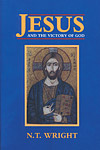 ve ever read, even if consistent to a fault. For example, Wright opposes much of popular Christian writing on Jesus by arguing that Jesus did in fact have a message to preach to His original hearers, not just a timeless system of salvation (this is easily misunderstood, Wright certainly believes in salvation for all ages). Wright reads the gospels in light of this understanding, which I agree with. However, being stubbornly consistent in this has led Wright to take some unlikely interpretations, such as the notion that Jesus never refers to His second coming. Those references in Mark 13 (and parallels) to Christ coming on the clouds of heaven are Christ's judgment on Jerusalem in 70AD rather than Him returning some day (again, Wright does believe Jesus is coming back from other texts, notably Paul, he just doesn't think Jesus Himself predicts it). I tend to think that runs contrary to the words of the angel in Acts 1:9-11, spoken a mere month and a half after Jesus uttered His words. At any rate, Wright is masterful in placing Jesus within His historical context and explaining His message in His own time (which does, in turn, help us understand it more clearly, rather than confusing it as some might suppose). Wright is also quite adept at pointing out the fundamental flaws in some scholars (such as Crossan & the Jesus Seminar). If you get nothing else out of his writings, you should pay attention to his methodology and his critiques of other's presuppositions. You will learn more than you counted on.
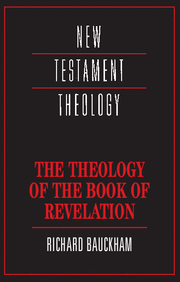 As with N T Wright, I had trouble choosing which Richard Bauckham book I would add to this list. Interestingly, my favorites are two small books. I could have chosen God Crucified: Monotheism and Christology in the New Testament (a mere 89 pages) and been quite happy with it. But I opted for his book in the New Testament Theology series, The Theology of the Book of Revelation. What I love about Bauckham (again, similar to Wright) is that you can learn how to do exegesis/theology while you read his books. Packed into 164 pages are discussions on the high Christology of Revelation (the sharing of divine titles and worship between the One who sits on the throne and the Lamb as evidence of this), the importance of God as Creator for the book ("Where faith in God the Creator wanes, so inevitably does hope for resurrection, let alone the new creation of all things. It is the God who is the Alpha who will also be the Omega." p51), a great discussion on true victory as depicted in Revelation (faithful witness through suffering and death), and so on. As I am currently teaching Revelation I continually find myself refering to Bauckham to make clear what I often find muddled.
Without a doubt my favorite book in NT studies is Gordon Fee's mageste rial tome, God's Empowering Presence: The Holy Spirit in the Letters of Paul. In this book, Fee discusses (in great depth) every instance where Paul mentions or alludes to the Holy Spirit. He covers grammatical issues, theological issues, contextual problems and so on with great clarity. This book is over 900 pages (!), but can be read in portions (although if you want to read it cover to cover I'm sure you'll still learn a lot). He pulls his exegetical discussions together at the end with a helpful synthesis of Paul's view of the Holy Spirit. One of the distinctive contributions Fee makes to this discussion is his insistence that the Holy Spirit was an experienced reality to Paul and his churches. In other words, there were actual manifestations of the Spirit's power and presence (see 1 Corinthians 14 and Galatians 3:5). While Fee comes from a Penecostal background, he does have some differing views from this tradition. Most notably is the view that all Christians are full of the Spirit from the moment of conversion. In Paul's mind, there is no such thing as a non-Spirit filled Christian, those terms are contradictory (see Romans 8:9 and the assumption that his readers all have the Spirit in Galatians 3:1-5 and 5:22-25).
So my first one is actually an honorable mention, which is kind of cheating (maybe I should have called this my top 6). The Bible Background Commentary on the New Testament by Craig Keener is technically a commentary, so it doesn't fit the criteria for my list. However, I feel that I can't leave it off because I have found it to be an indispensable resource (I just realized after I typed this sentence that those exact words are on the cover of the book, weird). The truth is that most of us never study ancient history or ancient cultures, so our knowledge of important background information is limited. We often get the sense that there is something going on that we don't understand because the NT culture is so far removed from our own. So whether you're dealing with head coverings or Jewish dinner customs, Keener has given us a crash course in ancient culture all in one book going passage by passage. I personally think that if someone learns the basics of exegesis and hermeneutics (see the Fee and Stuart books pictured on the right), then the most important resource for them is a good book on background information. Keener fits that bill.
Back in my senior year of college I took a class on the Life and Teachings of Jesus. One of the books assigned to us was this book, The Jesus Quest, by Ben Witherington III. I suppose it is
n't so much an NT studies book as it is a book about NT studies and studiers. Witherington is a master of making clear what is often confusing, especially when it comes to the view points of other scholars. In this book he takes on what is known as the "Quest for the Historical Jesus." He gives an overview of various scholarly opinions, from those of the Jesus Seminar (his chapter is great for those who aren't familiar with this group) to more serious scholars, such as John Meier and N T Wright. He gives solid critiques of the views presented, but also is able to pull away some good lessons to learn from just about any scholar. It would be nice if he would update this book to include some of the recent works (such as that of James Dunn), but if you're one of those who watch all those "Jesus specials" on TV (I'm raising my hand) and wonder who these scholars are, chances are Witherington will talk about them. I've always found Richard Hays to be an absolutely fascinating scholar. Though I often disagree with his approach, he never ceases to challenge my reading of a text. At least one of his books has become som
ething of a modern classic (Echoes of Scripture in the Letters of Paul) that is referred to frequently by NT scholars. Simply put, he's one of those scholars that you must deal with even when you disagree. That is how I approach this book on NT ethics, The Moral Vision of the New Testament. Hays will no doubt infuriate those from a strong conservative viewpoint (that would be me, by the way) because he doesn't really take an "inerrancy" point of view, but if you read him carefully you'll find that he presents strong cases for his arguments. He often comes away with conservative stances (abortion is wrong, homosexual intercourse is wrong, etc), but is probably not strong enough for some. In a rare touch for Bible scholars, he even includes some personal stories, which I find refreshing (his story about his good friend who was gay was particularly touching). His chapter on war and pacificism (he's a pacifist) was, to be honest, challenging. I'm not saying he turned me into a pacifist, but he certainly made me think. All this to say, I highly recommend this book, but only for those who are well grounded in Scripture. For someone who is still trying to figure out where they stand on some issues and struggle with the authority of the Bible in our lives, this is not the book for them.One of the hardest things about making this list is choosing only one N T Wright book. I could just as easily have chosen his book on Paul, The Climax of the Covenant or even better is his phenomenal treatment of the resurrection, The Resurrection of the Son of God, which is probably his best book. I have opted, however, to go with Jesus & the Victory of God because it was this book that introduced me to Wright's scholarship and made me a fan. Mind you, there are plenty of points of disagreement, but he often forces me to rethink my position. Wright is probably the most consistent scholar I'
ve ever read, even if consistent to a fault. For example, Wright opposes much of popular Christian writing on Jesus by arguing that Jesus did in fact have a message to preach to His original hearers, not just a timeless system of salvation (this is easily misunderstood, Wright certainly believes in salvation for all ages). Wright reads the gospels in light of this understanding, which I agree with. However, being stubbornly consistent in this has led Wright to take some unlikely interpretations, such as the notion that Jesus never refers to His second coming. Those references in Mark 13 (and parallels) to Christ coming on the clouds of heaven are Christ's judgment on Jerusalem in 70AD rather than Him returning some day (again, Wright does believe Jesus is coming back from other texts, notably Paul, he just doesn't think Jesus Himself predicts it). I tend to think that runs contrary to the words of the angel in Acts 1:9-11, spoken a mere month and a half after Jesus uttered His words. At any rate, Wright is masterful in placing Jesus within His historical context and explaining His message in His own time (which does, in turn, help us understand it more clearly, rather than confusing it as some might suppose). Wright is also quite adept at pointing out the fundamental flaws in some scholars (such as Crossan & the Jesus Seminar). If you get nothing else out of his writings, you should pay attention to his methodology and his critiques of other's presuppositions. You will learn more than you counted on.As with N T Wright, I had trouble choosing which Richard Bauckham book I would add to this list. Interestingly, my favorites are two small books. I could have chosen God Crucified: Monotheism and Christology in the New Testament (a mere 89 pages) and been quite happy with it. But I opted for his book in the New Testament Theology series, The Theology of the Book of Revelation. What I love about Bauckham (again, similar to Wright) is that you can learn how to do exegesis/theology while you read his books. Packed into 164 pages are discussions on the high Christology of Revelation (the sharing of divine titles and worship between the One who sits on the throne and the Lamb as evidence of this), the importance of God as Creator for the book ("Where faith in God the Creator wanes, so inevitably does hope for resurrection, let alone the new creation of all things. It is the God who is the Alpha who will also be the Omega." p51), a great discussion on true victory as depicted in Revelation (faithful witness through suffering and death), and so on. As I am currently teaching Revelation I continually find myself refering to Bauckham to make clear what I often find muddled.Without a doubt my favorite book in NT studies is Gordon Fee's mageste
rial tome, God's Empowering Presence: The Holy Spirit in the Letters of Paul. In this book, Fee discusses (in great depth) every instance where Paul mentions or alludes to the Holy Spirit. He covers grammatical issues, theological issues, contextual problems and so on with great clarity. This book is over 900 pages (!), but can be read in portions (although if you want to read it cover to cover I'm sure you'll still learn a lot). He pulls his exegetical discussions together at the end with a helpful synthesis of Paul's view of the Holy Spirit. One of the distinctive contributions Fee makes to this discussion is his insistence that the Holy Spirit was an experienced reality to Paul and his churches. In other words, there were actual manifestations of the Spirit's power and presence (see 1 Corinthians 14 and Galatians 3:5). While Fee comes from a Penecostal background, he does have some differing views from this tradition. Most notably is the view that all Christians are full of the Spirit from the moment of conversion. In Paul's mind, there is no such thing as a non-Spirit filled Christian, those terms are contradictory (see Romans 8:9 and the assumption that his readers all have the Spirit in Galatians 3:1-5 and 5:22-25).
Sunday, April 08, 2007
Easter service comedy
This morning in church our pastor gave a childrens sermon, which is always a treat. After he had gathered all the kids of the church around him, he asked them what was special about Easter.
A little boy, William, age 3, yells out, "new underpants!"
A little boy, William, age 3, yells out, "new underpants!"
Friday, April 06, 2007
once again, 5.5 random things
5.5: This post is dedicated to Sarasota, Florida. Though you are hot, you were a pleasure to visit.
5: Well, the Sox have started out 2-2, with 1 great pitching performance (Dice-K), 2 good pitching performances (Beckett and Wakefield, who lost due to a lack of offense), and 1 horrible one from Curt Schilling, who thinks he deserves a $13 million dollar extension for next year, despite the fact that he's only getting older (at an age when this is not helpful) and his numbers have dropped each year he's been here. Obviously it's early, but you have to wonder about him. Plus, he has a blog now, how cliche is that!
4: Boston is hardly a hotbed for college sports, but the city paid more attention to this year's basketball tournament than probably any in recent memory (including ones where Boston College actually had a chance to make some waves). This is due to the Celtics' deplorable record, ensuring that they will not pick worse than number 5 in this year's draft. My fear is that they'll buy into the hype and draft Joakim Noah from Florida. He's done well in college, and I'm always fond of picking proven winners, but he'll never be more than a good bench player in the pros. He can play some defense, can rebound, and will out-hustle anyone on the floor. But he can't shoot, at all, and I'm not convinced he'll be able to cover power forwards in the NBA (can you picture him covering Duncan, Garnett or Brand?).
3: Speaking of drafts, you may get a kick out of this, courtesy of Tim Challies.
2: I'm ready for a weather change here in Boston. I've always loved the cold, and I always will. But I think living in an apartment with no heat this year (yes, that's right, no heat all winter) has finally taken its toll, well, that and being in Florida last week where I could wear shorts all day long and not have to worry about it. Besides, it's baseball season, it's time to be outside playing and watching games, not bundling up. I think I'm getting soft in my old age.
1: Well folks, it's Good Friday. Easter is my favorite holiday of the year. I pray that you all relish in the grace that God has given us. Take time to meditate on the single greatest act of love and power this world has ever, and will ever, witness. Praise God for the death and resurrection of His Son!
5: Well, the Sox have started out 2-2, with 1 great pitching performance (Dice-K), 2 good pitching performances (Beckett and Wakefield, who lost due to a lack of offense), and 1 horrible one from Curt Schilling, who thinks he deserves a $13 million dollar extension for next year, despite the fact that he's only getting older (at an age when this is not helpful) and his numbers have dropped each year he's been here. Obviously it's early, but you have to wonder about him. Plus, he has a blog now, how cliche is that!
4: Boston is hardly a hotbed for college sports, but the city paid more attention to this year's basketball tournament than probably any in recent memory (including ones where Boston College actually had a chance to make some waves). This is due to the Celtics' deplorable record, ensuring that they will not pick worse than number 5 in this year's draft. My fear is that they'll buy into the hype and draft Joakim Noah from Florida. He's done well in college, and I'm always fond of picking proven winners, but he'll never be more than a good bench player in the pros. He can play some defense, can rebound, and will out-hustle anyone on the floor. But he can't shoot, at all, and I'm not convinced he'll be able to cover power forwards in the NBA (can you picture him covering Duncan, Garnett or Brand?).
3: Speaking of drafts, you may get a kick out of this, courtesy of Tim Challies.
2: I'm ready for a weather change here in Boston. I've always loved the cold, and I always will. But I think living in an apartment with no heat this year (yes, that's right, no heat all winter) has finally taken its toll, well, that and being in Florida last week where I could wear shorts all day long and not have to worry about it. Besides, it's baseball season, it's time to be outside playing and watching games, not bundling up. I think I'm getting soft in my old age.
1: Well folks, it's Good Friday. Easter is my favorite holiday of the year. I pray that you all relish in the grace that God has given us. Take time to meditate on the single greatest act of love and power this world has ever, and will ever, witness. Praise God for the death and resurrection of His Son!
Monday, March 26, 2007
2007 Boston Red Sox: preseason thoughts
Before I head to the sunny shores of Gulf Coast Florida for a short vacation, I thought I'd share some thoughts I have on the upcoming season for the Boston Red Sox. I think there's plenty of reason to be excited, but there are always a number of question marks. Without further ado, here you go:
Infield:
Catcher- There is the mainstay of the franchise at catcher, Jason Varitek. With him you'll know that you'll get some decent offense and the best gamecaller in baseball.
3B & 1B- We know that the corners will provide slightly better than average offense with Mike Lowell and Kevin Youkilis. Lowell is excellent defensively as long as he stays healthy, and Youkilis turned out to be better than anyone thought he would be. I'd still like to have more offense from the first base position, but it's not like he's a lame duck.
2B & SS- As far as the middle infield we've gone from Gonzalez-Loretta to Lugo-Pedroia. That's a serious downgrade defensively (especially losing Gonzalez at shortstop), but an upgrade offensively. I personally think they'll miss Gonzalez more than the management thinks, he is a one-of-a-kind talent at shortstop. The advantage is that Lugo is much better offensively. But I have to wonder if the Sox have strayed from the attitude that helped them win the World Series in 2004 when they traded offense for great defensive players. I guess we'll find out. Pedroia is dreadful offensively, but we can hope that his short time in the big leagues in September (when he basically took a dump at the plate) was an aberration. I have a feeling that he won't be the starting second basemen by the middle of the season, with veteran Alex Cora starting or a trade bringing in another veteran. We'll see.
DH- I guess I'll throw in David Ortiz here, but nothing more needs to be said about him. He's the best clutch hitter in baseball. Of everyone on this team, he's the least of our worries. Expect another MVP caliber season out of him.
Outfield:
Leftfield- Manny Ramirez. Drama. Occasional laziness. Fake injuries. Guaranteed production from one of the best hitters in baseball. I'll take it.
Centerfield- Coco Crisp had a very disappointing first season with the BoSox, largely due to injuries. Many here in Boston were crying for his departure at the season's end, but I think he's worth more time. He's got tons of talent (he's so fast!), and even though he throws like a girl he helps in the field. His offense was down last year, but it's hard to hit when you play with a broken finger. I'm hoping for a healthy and productive season and a trip back up to the top of the order for Coco.
Rightfield- We let Trot Nixon, our beloved rightfielder, go because of his constant injury problems, giving up his $6 million dollar salary. Instead, we picked up JD Drew and his 8 career trips to the disabled list (!) for $14 million. That's $14 million a year for 5 years for a man who has been incredibly average his entire career. He has 8 more trips to the disabled list than trips to the all-star game. And you'll remember that I wrote just 2 sentences ago that he's been on the DL 8 times. I'd rather give the full time position to Wily Mo Pena and his lower salary and see what happens.
Starting Pitching:
It's interesting, folks up here in Boston are raving about the starting pitching. It certainly has the names, here's the rotation as it stands today:
1- Curt Schilling
2- Josh Beckett
3- Daisuke Matsuzaka
4- Tim Wakefield
5- Kyle Snyder/Julian Tavares
That looks good, there's no doubt. But Schilling is only getting older, and despite his own claims of feeling like he'll do great, there's no reason to think that his decline will stop suddenly. That's not to say he'll be awful, but he won't be great. Beckett had a disappointing year last year, but he's young and full of talent. Matsuzaka is a bit of a wild card, he could be incredible, he could be incredibly average. I think he'll do well, 15-17 wins sounds about right, which is great for a #3 starter. All in all, this has the potential to be the best starting rotation in the American League.
Bullpen:
With Jonathan Papelbon moving into the closer role the bullpen is blostered enormously. While I think Papelbon is better off being a starter in the long run, for this season the team is helped more by him being a closer. That frees Timlin, Pineiro, Donnelly, and crew to play the set up roles and provide stability. In one day this bullpen went from shakey to very good with Papelbon's move. My guess is that they'll add another arm to the bullpen, either through a trade or with John Lester's return from cancer coming in a couple months (he could end up in the starting rotation, which would mean one of the #5's mentioned above moving into the bullpen).
So here's my prediction: 99-63, narrowly winning the American League East over the Yankees. And of course I'm predicting they'll win the World Series. This time it doesn't feel like a stretch.
Infield:
Catcher- There is the mainstay of the franchise at catcher, Jason Varitek. With him you'll know that you'll get some decent offense and the best gamecaller in baseball.
3B & 1B- We know that the corners will provide slightly better than average offense with Mike Lowell and Kevin Youkilis. Lowell is excellent defensively as long as he stays healthy, and Youkilis turned out to be better than anyone thought he would be. I'd still like to have more offense from the first base position, but it's not like he's a lame duck.
2B & SS- As far as the middle infield we've gone from Gonzalez-Loretta to Lugo-Pedroia. That's a serious downgrade defensively (especially losing Gonzalez at shortstop), but an upgrade offensively. I personally think they'll miss Gonzalez more than the management thinks, he is a one-of-a-kind talent at shortstop. The advantage is that Lugo is much better offensively. But I have to wonder if the Sox have strayed from the attitude that helped them win the World Series in 2004 when they traded offense for great defensive players. I guess we'll find out. Pedroia is dreadful offensively, but we can hope that his short time in the big leagues in September (when he basically took a dump at the plate) was an aberration. I have a feeling that he won't be the starting second basemen by the middle of the season, with veteran Alex Cora starting or a trade bringing in another veteran. We'll see.
DH- I guess I'll throw in David Ortiz here, but nothing more needs to be said about him. He's the best clutch hitter in baseball. Of everyone on this team, he's the least of our worries. Expect another MVP caliber season out of him.
Outfield:
Leftfield- Manny Ramirez. Drama. Occasional laziness. Fake injuries. Guaranteed production from one of the best hitters in baseball. I'll take it.
Centerfield- Coco Crisp had a very disappointing first season with the BoSox, largely due to injuries. Many here in Boston were crying for his departure at the season's end, but I think he's worth more time. He's got tons of talent (he's so fast!), and even though he throws like a girl he helps in the field. His offense was down last year, but it's hard to hit when you play with a broken finger. I'm hoping for a healthy and productive season and a trip back up to the top of the order for Coco.
Rightfield- We let Trot Nixon, our beloved rightfielder, go because of his constant injury problems, giving up his $6 million dollar salary. Instead, we picked up JD Drew and his 8 career trips to the disabled list (!) for $14 million. That's $14 million a year for 5 years for a man who has been incredibly average his entire career. He has 8 more trips to the disabled list than trips to the all-star game. And you'll remember that I wrote just 2 sentences ago that he's been on the DL 8 times. I'd rather give the full time position to Wily Mo Pena and his lower salary and see what happens.
Starting Pitching:
It's interesting, folks up here in Boston are raving about the starting pitching. It certainly has the names, here's the rotation as it stands today:
1- Curt Schilling
2- Josh Beckett
3- Daisuke Matsuzaka
4- Tim Wakefield
5- Kyle Snyder/Julian Tavares
That looks good, there's no doubt. But Schilling is only getting older, and despite his own claims of feeling like he'll do great, there's no reason to think that his decline will stop suddenly. That's not to say he'll be awful, but he won't be great. Beckett had a disappointing year last year, but he's young and full of talent. Matsuzaka is a bit of a wild card, he could be incredible, he could be incredibly average. I think he'll do well, 15-17 wins sounds about right, which is great for a #3 starter. All in all, this has the potential to be the best starting rotation in the American League.
Bullpen:
With Jonathan Papelbon moving into the closer role the bullpen is blostered enormously. While I think Papelbon is better off being a starter in the long run, for this season the team is helped more by him being a closer. That frees Timlin, Pineiro, Donnelly, and crew to play the set up roles and provide stability. In one day this bullpen went from shakey to very good with Papelbon's move. My guess is that they'll add another arm to the bullpen, either through a trade or with John Lester's return from cancer coming in a couple months (he could end up in the starting rotation, which would mean one of the #5's mentioned above moving into the bullpen).
So here's my prediction: 99-63, narrowly winning the American League East over the Yankees. And of course I'm predicting they'll win the World Series. This time it doesn't feel like a stretch.
Saturday, March 03, 2007
one last plug
I've done this a few times, but this is the last time, I promise. My good friend, Brian, has made his blogging return. In his first post back he quotes AC/DC. In his second post he tackles the Documentary Hypothesis. That is a sign of a good blogger. I'm glad you're back, B-Funk Marchizzle, I hope you stay. I've added a link to the right.
Thursday, March 01, 2007
Notions of New Nomenclature: Saul to Paul
One of the perplexing changes that occur in the Bible is the sudden switch from Saul of Tarsus being known as Paul. From his introduction in Acts 7:58 he was simply known as Saul, the once persecutor turned preacher of Christ. Seemingly out of nowhere in Acts 13:9 we read, "Then Saul, who was also called Paul..." and from then on he is always refered to as Paul. By the time of his earliest letter (which I take to be Galatians) he only refers to himself as Paul, the apostle to the Gentiles.
There have been a number of suggestions for this change. The one that most of us probably heard over the years is that Paul changed his name when he became a Christian, presumably because the association with Saul, the rejected king who disobeyed God and attempted to murder David, was no longer a favorable one (as if it would be any more favorable for a Jewish person). One book even states, "Jesus changes Saul's name to Paul" (137), which is a bewildering statement considering Jesus' role in the name change is never spelled out by any biblical writer (or even suggested).
Perhaps my prefered suggestion is that Paul, being a Roman citizen, actually would have had 3 names including his ethnic name (Saul, his Jewish name) and a more Romanized name, in this case, Paul. You can find this in a couple places, I always recommend Craig Keener's Biblical Background Commentary on the NT for this type of info. This would lend us to think that Paul strategically begins to go by his Roman name as he ministers more and more to Gentiles (and it might not be a coincidence that Sergius Paulus is mentioned in Acts 13 as well, perhaps Paul was hoping to garner some favor). Obviously one could go by two names, Peter is known as Cephas (Aramaic) and Peter (Greek) in the NT (though he is not a Roman citizen, and these are nicknames anyway, remember his name is actually Simon); but it is understandable why Paul made this decision.
But today I ran across an article by one of my former professors, Sean McDonough, in the summer edition of the Journal of Biblical Literature. He makes another suggestion that I find intriguing, though perhaps not convincing. He notes how Paul, as he begins preaching in 13:16, gives a "history of Israel" in sermonic form (not unlike Stephen in Acts 7) and includes a reference to Saul in vv21-22, the only time he is mentioned in the entire NT (I believe). McDonough suggests that this is an odd thing to mention (there are more important characters left out of his sermon), but believes it gives us a clue to why Saul begins to go by "Paul."
King Saul was a man of great physical stature, one who commanded respect merely at the sight of him. But his character did not match his imposing size, making him a goat more than a hero in the biblical story. Saul of Tarsus had a different goal in mind (who wouldn't?), and opted not to be associated with one of great physical presence, so he adopted Paulus as his name. Paulus is a Latin name meaning "small." It was a fairly common name in the ancient world. In switching his name, Paul was declaring that he was not going to be a physically dominating man, but a "small" man (in the eyes of the world). Of course, if 2 Corinthians 10:10 ("in person he is unimpressive") refers to his small stature, he may not have had a choice.
At any rate, I'm not really convinced this is what Paul had in mind, I still think the second option mentioned is preferable. Both the latter 2 are better than the first, which has little biblical evidence to commend it. I guess I lean towards the second simply because the biblical writers, including Paul, don't make a big deal out of the name change, so we probably shouldn't either (unless Luke was being really subtle). Instead, if there is a reasonable suggestion based on solid (historical) evidence that would have made sense to the original readers, that's the one I'll choose. If anyone is still reading this blog, I'd love to hear what you think.
There have been a number of suggestions for this change. The one that most of us probably heard over the years is that Paul changed his name when he became a Christian, presumably because the association with Saul, the rejected king who disobeyed God and attempted to murder David, was no longer a favorable one (as if it would be any more favorable for a Jewish person). One book even states, "Jesus changes Saul's name to Paul" (137), which is a bewildering statement considering Jesus' role in the name change is never spelled out by any biblical writer (or even suggested).
Perhaps my prefered suggestion is that Paul, being a Roman citizen, actually would have had 3 names including his ethnic name (Saul, his Jewish name) and a more Romanized name, in this case, Paul. You can find this in a couple places, I always recommend Craig Keener's Biblical Background Commentary on the NT for this type of info. This would lend us to think that Paul strategically begins to go by his Roman name as he ministers more and more to Gentiles (and it might not be a coincidence that Sergius Paulus is mentioned in Acts 13 as well, perhaps Paul was hoping to garner some favor). Obviously one could go by two names, Peter is known as Cephas (Aramaic) and Peter (Greek) in the NT (though he is not a Roman citizen, and these are nicknames anyway, remember his name is actually Simon); but it is understandable why Paul made this decision.
But today I ran across an article by one of my former professors, Sean McDonough, in the summer edition of the Journal of Biblical Literature. He makes another suggestion that I find intriguing, though perhaps not convincing. He notes how Paul, as he begins preaching in 13:16, gives a "history of Israel" in sermonic form (not unlike Stephen in Acts 7) and includes a reference to Saul in vv21-22, the only time he is mentioned in the entire NT (I believe). McDonough suggests that this is an odd thing to mention (there are more important characters left out of his sermon), but believes it gives us a clue to why Saul begins to go by "Paul."
King Saul was a man of great physical stature, one who commanded respect merely at the sight of him. But his character did not match his imposing size, making him a goat more than a hero in the biblical story. Saul of Tarsus had a different goal in mind (who wouldn't?), and opted not to be associated with one of great physical presence, so he adopted Paulus as his name. Paulus is a Latin name meaning "small." It was a fairly common name in the ancient world. In switching his name, Paul was declaring that he was not going to be a physically dominating man, but a "small" man (in the eyes of the world). Of course, if 2 Corinthians 10:10 ("in person he is unimpressive") refers to his small stature, he may not have had a choice.
At any rate, I'm not really convinced this is what Paul had in mind, I still think the second option mentioned is preferable. Both the latter 2 are better than the first, which has little biblical evidence to commend it. I guess I lean towards the second simply because the biblical writers, including Paul, don't make a big deal out of the name change, so we probably shouldn't either (unless Luke was being really subtle). Instead, if there is a reasonable suggestion based on solid (historical) evidence that would have made sense to the original readers, that's the one I'll choose. If anyone is still reading this blog, I'd love to hear what you think.
Monday, February 26, 2007
assumptions & arguments: early Christian beliefs in 1 Corinthians
Sometimes it takes being sick to help us realize what is truly important, like blogging. Okay, that's a bunch of crud, but I since I've called out of work (or called in, which do you say?) I have the time to write something. In fact, I may write two somethings if I have time. Anyway, it's been over 3 weeks since I last blogged, even my own mother was making fun of me the other day for it.
I'm just beginning to teach 1 Corinthians in a class for my church and I'm really excited. One thing I notice about this letter of Paul is how it gives us a clue into the life of the early church that we might not otherwise have if the Corinthians weren't so screwed up. For instance, there is no other book in the NT where it clearly states that the earliest Christians regularly observed the Lord's Supper. True, we have mentioning of breaking bread in homes in Acts 2:46 which may well refer to this, "tasting the heavenly gift" in Hebrews 6 is another possibility; there may be more, these were just off the top of my head. But I'm not sure we would have strong NT evidence without 1 Corinthians (side note: take a moment and read 1 Cor 11:17-34 and note in what ways most of us do not observe the Lord's Supper in the manner Paul instructs here).
What I find more interesting, however, is not the controversial points, but those points which Paul assumes he and his readers agree to. The common ground they share gives us a great clue as to what the earliest Christians believed and practiced. For instance, even with a largely Gentile congregation Paul refers to the OT Scriptures in a way that assumes they know what he's talking about. Even if they don't have the background Paul does, they know enough that Paul feels comfortable using them (I'm assuming, of course, that Paul is knowledgable of their Scriptural comprehension and not overshooting).
You'll also see how Paul, in 8:6, weaves Jesus into the Shema (from Deuteronomy 6:4-5), which is quite a strong statement of Jesus' divinity coming from the pen of a Jew. Again, he doesn't argue this point, he assumes the readers accept it already. In fact, he so strongly assumes its acceptance he uses as a building block for his argument. This indicates that the divinity of Jesus was already considered standard doctrine very early (scholars Larry Hurtado and Richard Bauckham have argued this at length).
One last thing I noticed is the reference to Jesus' earthly life that Paul makes in 1 Cor 11:23-25. It is a common criticism of more liberal scholars to claim that Paul really didn't know much, if anything, about Jesus' life on earth, otherwise Paul would refer to it more often. Here, Paul, while discussing the Lord's Supper, quotes from Jesus. He even puts it within a context- "on the night he was betrayed" (v23). Paul is clearly aware of the tradition of Jesus' betrayal and feasting with His disciples and assumes the Corinthians are as well. Is it unreasonable to imagine that Paul discussed these things with them when he was present and preaching the gospel? These are the foundational aspects of Pauline Christianity, we are reading the problems that arise in living out the gospel (this goes for 1 Corinthians, Galatians and most other Pauline letters).
My point is this: if you want to get an accurate look at the earliest Christian beliefs and practices, sometimes the best thing you can do is read what is assumed rather than what is argued. Since these letters were written to address specific situations at specific times we ought to excuse Paul for not writing a systematic theology textbook (no, not even Romans counts). Like a good pastor he is trying to right the ship where it has gone off course. He uses the gospel, the Jesus tradition and his previous teachings to lay the foundation, but spends most of his time arguing the implications of these things in the life of his churches.
I'm just beginning to teach 1 Corinthians in a class for my church and I'm really excited. One thing I notice about this letter of Paul is how it gives us a clue into the life of the early church that we might not otherwise have if the Corinthians weren't so screwed up. For instance, there is no other book in the NT where it clearly states that the earliest Christians regularly observed the Lord's Supper. True, we have mentioning of breaking bread in homes in Acts 2:46 which may well refer to this, "tasting the heavenly gift" in Hebrews 6 is another possibility; there may be more, these were just off the top of my head. But I'm not sure we would have strong NT evidence without 1 Corinthians (side note: take a moment and read 1 Cor 11:17-34 and note in what ways most of us do not observe the Lord's Supper in the manner Paul instructs here).
What I find more interesting, however, is not the controversial points, but those points which Paul assumes he and his readers agree to. The common ground they share gives us a great clue as to what the earliest Christians believed and practiced. For instance, even with a largely Gentile congregation Paul refers to the OT Scriptures in a way that assumes they know what he's talking about. Even if they don't have the background Paul does, they know enough that Paul feels comfortable using them (I'm assuming, of course, that Paul is knowledgable of their Scriptural comprehension and not overshooting).
You'll also see how Paul, in 8:6, weaves Jesus into the Shema (from Deuteronomy 6:4-5), which is quite a strong statement of Jesus' divinity coming from the pen of a Jew. Again, he doesn't argue this point, he assumes the readers accept it already. In fact, he so strongly assumes its acceptance he uses as a building block for his argument. This indicates that the divinity of Jesus was already considered standard doctrine very early (scholars Larry Hurtado and Richard Bauckham have argued this at length).
One last thing I noticed is the reference to Jesus' earthly life that Paul makes in 1 Cor 11:23-25. It is a common criticism of more liberal scholars to claim that Paul really didn't know much, if anything, about Jesus' life on earth, otherwise Paul would refer to it more often. Here, Paul, while discussing the Lord's Supper, quotes from Jesus. He even puts it within a context- "on the night he was betrayed" (v23). Paul is clearly aware of the tradition of Jesus' betrayal and feasting with His disciples and assumes the Corinthians are as well. Is it unreasonable to imagine that Paul discussed these things with them when he was present and preaching the gospel? These are the foundational aspects of Pauline Christianity, we are reading the problems that arise in living out the gospel (this goes for 1 Corinthians, Galatians and most other Pauline letters).
My point is this: if you want to get an accurate look at the earliest Christian beliefs and practices, sometimes the best thing you can do is read what is assumed rather than what is argued. Since these letters were written to address specific situations at specific times we ought to excuse Paul for not writing a systematic theology textbook (no, not even Romans counts). Like a good pastor he is trying to right the ship where it has gone off course. He uses the gospel, the Jesus tradition and his previous teachings to lay the foundation, but spends most of his time arguing the implications of these things in the life of his churches.
Saturday, February 03, 2007
dealing with writer's block
Well, it's been a while since I've posted anything, even longer since I've posted anything of any substance. Instead, I will direct you to what is now my favorite comic strip. My sister e-mailed me a link a while back to Dinosaur Comics, a comic strip where only the text changes, never the pictures. I find it hilarious, though it is certainly not for everyone. Case in point, read this and decide if you like it or not (this is the particular comic my sister sent to me). If not, Dinosaur Comics might not be for you, though I think you should check out more of them.
While I'm here, check out Elijah Teague's first report card, given to him by his father, Bruce. I think he did pretty well for a newbie. And for more baby stuff, see Matt & Pam's latest post (better check it out, they only come about twice a year) about their baby. This is what happens when your friends are pregnant or new parents, you end up filling your blog with baby stuff. I need a life.
While I'm here, check out Elijah Teague's first report card, given to him by his father, Bruce. I think he did pretty well for a newbie. And for more baby stuff, see Matt & Pam's latest post (better check it out, they only come about twice a year) about their baby. This is what happens when your friends are pregnant or new parents, you end up filling your blog with baby stuff. I need a life.
Monday, January 22, 2007
The Day of Reckoning: Patriots-Colts, postgame thoughts
There is no worse feeling as a sports fan than watching your team collapse and lose a big game. I should know, I'm a Red Sox fan. And no matter how many times it happens, you never get used to it. I never really thought the Patriots of this decade would hurt me like the Sox have time and time again. A comeback story is always fun, unless you were rooting for Ivan Drago or something. In this case, I was. Here are some quick thoughts.
People I'd Like To Blame:
1. Reche Caldwell- two dropped passes in crucial situations. The worst was when the Colts forgot to cover him. The Pats should have scored a touchdown, instead they settled for the field goal. That's a 4-point difference. How many points did they lose by? 4.
2. Bill Belicheck- how is it possible that he had a terrific game plan in the 1st half, but didn't come up with something better in the 2nd? And Corey Dillon getting only 1 carry in the 2nd half? I realize he ain't what he used to be, but that's ridiculous.
3. The refs- sounds cheap, and it is. They really blew the roughing the passer call on Banta Cain, which put Indy on the 12 to win the game. But, in the end, it really doesn't matter, the Pats probably would have lost anyway.
4. The linebackers- can we please cover somebody? Please?
5. Bill Belicheck- wait, I'm not done with him yet. I think it's about time he learns that he can't just plug anybody in a position and expect to win. Eric Alexander playing linebacker on the must crucial stand of the season?!?!?! Are you kidding me?!?!?! Who is he? No, seriously, who is he? You only get so many chances to win Super Bowls, you shouldn't try to squeeze by like the Patriots have done the last 2 years.
Ultimately, though, this game wasn't about the Patriots blowing an 18-point lead, to focus on that is to take away credit from Peyton Manning and the Colts. Manning has always had the reputation of blowing the big game, and it looked like he was well on his way in the 1st half. His interception to Asante Samuel was telegraphed the whole way, and when he took the delay of game penalty on his own 5 it looked like he was completely shell shocked. Then he comes out in the 2nd half, abandons the long ball for the short game and leads his team to victory. The Colts scored on 4 consecutive drives in the 2nd half against the #2 defense in the NFL. He deserves credit for beating the Patriots in an important game, something many thought he'd never do. I hope he goes on to win the Super Bowl against the Bears, then returns to form next year and loses to New England. He deserves it.
People I'd Like To Blame:
1. Reche Caldwell- two dropped passes in crucial situations. The worst was when the Colts forgot to cover him. The Pats should have scored a touchdown, instead they settled for the field goal. That's a 4-point difference. How many points did they lose by? 4.
2. Bill Belicheck- how is it possible that he had a terrific game plan in the 1st half, but didn't come up with something better in the 2nd? And Corey Dillon getting only 1 carry in the 2nd half? I realize he ain't what he used to be, but that's ridiculous.
3. The refs- sounds cheap, and it is. They really blew the roughing the passer call on Banta Cain, which put Indy on the 12 to win the game. But, in the end, it really doesn't matter, the Pats probably would have lost anyway.
4. The linebackers- can we please cover somebody? Please?
5. Bill Belicheck- wait, I'm not done with him yet. I think it's about time he learns that he can't just plug anybody in a position and expect to win. Eric Alexander playing linebacker on the must crucial stand of the season?!?!?! Are you kidding me?!?!?! Who is he? No, seriously, who is he? You only get so many chances to win Super Bowls, you shouldn't try to squeeze by like the Patriots have done the last 2 years.
Ultimately, though, this game wasn't about the Patriots blowing an 18-point lead, to focus on that is to take away credit from Peyton Manning and the Colts. Manning has always had the reputation of blowing the big game, and it looked like he was well on his way in the 1st half. His interception to Asante Samuel was telegraphed the whole way, and when he took the delay of game penalty on his own 5 it looked like he was completely shell shocked. Then he comes out in the 2nd half, abandons the long ball for the short game and leads his team to victory. The Colts scored on 4 consecutive drives in the 2nd half against the #2 defense in the NFL. He deserves credit for beating the Patriots in an important game, something many thought he'd never do. I hope he goes on to win the Super Bowl against the Bears, then returns to form next year and loses to New England. He deserves it.
Friday, January 19, 2007
another football post: Pats-Colts, this Sunday
Imagine a team with a star quarterback. Now imagine that this team has played the last two games with him playing poorly, and I mean poorly. Now imagine that this team has a defense without many Pro Bowlers, but who have played the last two games with tenacity and grit. This team has won both of those games despite the quarterback because the defense stepped up and played big.
What scares me is that this describes both the Patriots and the Colts, but perhaps the Colts moreso than the Pats. What scares me is that this is the formula the Pats have used over and over again throughout this decade, and they've won 3 Super Bowls. Contrast that with the Peyton Manning-led Colts, who won because their quarterback would feast on inferior defenses and his defense was just good enough to hold on. That formula never works. But for the last two games the Colts have won even though Manning has played poorly; they've won because the defense was able to shut down the opposing team. This has been a hallmark of Patriots football, now the Colts are trying for their version.
It's funny how the human mind works. Last week the Pats were the heavy underdogs, and I convinced myself they would win (and I was right, in case you forgot). This week the Pats might still be underdogs (largely because of the national media's collective mancrush on Peyton Manning), but many give them a good shot at winning. And I find myself finding reasons why this will be the year the Colts finally beat the Pats in a game that matters. I think years of being a Red Sox fan and watching them lose so often has conditioned me to think this way (it's funny how winning a World Series hasn't changed that too much).
But, I've decided to be more brave and actually attempt a real pick. Instead of expecting to lose and celebrating at the joy of winning, I've opted to expect what I think will really happen. I may not be successful, but I'll give it a whirl. So with that in mind, here are some thoughts:
The Colts defense has been playing well, but it's easy to overstate their effort. This past Sunday was against the Baltimore Ravens, who own one of the worst offenses in football. When you're entire offense is built around a way-past-his-prime quarterback, a decent tight end and a decent running back, well, you're in trouble. And their playoff opener was against the Kansas City Chiefs, a team coached by Herm Edwards. We Patriots fans know Herm well from his days with the New York Jets. I'm not sure Herm could have coached a worse game, it was a gift to the Colts, quite frankly. But, you can't hold that against the Colts defense. You can only play the teams you're scheduled to play, and they've beaten them. That's all you can do.
The Colts clearly have an advantage in the kicking game, where they now have Adam Vinatieri, the great former Patriots kicker. He's the greatest clutch kicker in football history, whereas we have a rookie kicker. Let's hope this doesn't come down to field goals.
I find it funny how many people in the national media are claiming that this is "Peyton Manning's time". In fact, a sports show here in Boston got a lot of mileage out of it, and I tend to agree with them. Since when does that pass as in-depth analysis? "Why will the Colts win this game? Because it's Peyton's time." Does that make sense? Does this work in any other realm of life (other than the Oscars)? Does it work on Wall Street? What about in your job? School? What about dating, does it work there? Wait, nevermind.
On the flip side, maybe the fact that Peyton is able to win despite playing poorly is a sign of things changing. Oddly enough, if he had sprung for 5 touchdown passes over the last two games I would be less worried, because it would mean to me that he's just the same old Peyton. But he's taken a page out of Tom Brady's playbook- play crappy football for a while, put together a drive or two when it matters. Brady's won 3 Super Bowls. Doesn't necessarily make much sense, but it scares me a bit.
As for the Patriots, they'll have to run the ball well. Looking back 2 years ago, most thought the Patriots would lose to the Colts in the playoffs, but the Pats introduced them to Clock Killin' Corey Dillon. It would be nice to see Dillon run the ball down their throats like old times.
The front 7 for New England will have to get pressure on Manning and be able to stop the run without help from the secondary. The Colts have great receivers, as well as a good tight end, so the defensive backfield will have their hands full. In fact, I think New the Patriots will have to cheat with a linebacker dropping back, which may mean there are only 6 guys playing up front, especially if Rodney Harrison is out again.
The biggest advantage the Patriots have is the coaching. Belicheck has consistently come up with game plans to confuse Manning. I realize that the Colts have won the last 2 regular season matchups, but there were major injury problems last year and this year the Pats have improved tremendously since they played earlier in the season. Some may call this a cop-out, I call it truth. In football, more than any other sport, coaching counts, advantage New England.
So here is my call for this Sunday, subject to deletion if I'm wrong:
Colts- 24
Patriots- 31
What scares me is that this describes both the Patriots and the Colts, but perhaps the Colts moreso than the Pats. What scares me is that this is the formula the Pats have used over and over again throughout this decade, and they've won 3 Super Bowls. Contrast that with the Peyton Manning-led Colts, who won because their quarterback would feast on inferior defenses and his defense was just good enough to hold on. That formula never works. But for the last two games the Colts have won even though Manning has played poorly; they've won because the defense was able to shut down the opposing team. This has been a hallmark of Patriots football, now the Colts are trying for their version.
It's funny how the human mind works. Last week the Pats were the heavy underdogs, and I convinced myself they would win (and I was right, in case you forgot). This week the Pats might still be underdogs (largely because of the national media's collective mancrush on Peyton Manning), but many give them a good shot at winning. And I find myself finding reasons why this will be the year the Colts finally beat the Pats in a game that matters. I think years of being a Red Sox fan and watching them lose so often has conditioned me to think this way (it's funny how winning a World Series hasn't changed that too much).
But, I've decided to be more brave and actually attempt a real pick. Instead of expecting to lose and celebrating at the joy of winning, I've opted to expect what I think will really happen. I may not be successful, but I'll give it a whirl. So with that in mind, here are some thoughts:
The Colts defense has been playing well, but it's easy to overstate their effort. This past Sunday was against the Baltimore Ravens, who own one of the worst offenses in football. When you're entire offense is built around a way-past-his-prime quarterback, a decent tight end and a decent running back, well, you're in trouble. And their playoff opener was against the Kansas City Chiefs, a team coached by Herm Edwards. We Patriots fans know Herm well from his days with the New York Jets. I'm not sure Herm could have coached a worse game, it was a gift to the Colts, quite frankly. But, you can't hold that against the Colts defense. You can only play the teams you're scheduled to play, and they've beaten them. That's all you can do.
The Colts clearly have an advantage in the kicking game, where they now have Adam Vinatieri, the great former Patriots kicker. He's the greatest clutch kicker in football history, whereas we have a rookie kicker. Let's hope this doesn't come down to field goals.
I find it funny how many people in the national media are claiming that this is "Peyton Manning's time". In fact, a sports show here in Boston got a lot of mileage out of it, and I tend to agree with them. Since when does that pass as in-depth analysis? "Why will the Colts win this game? Because it's Peyton's time." Does that make sense? Does this work in any other realm of life (other than the Oscars)? Does it work on Wall Street? What about in your job? School? What about dating, does it work there? Wait, nevermind.
On the flip side, maybe the fact that Peyton is able to win despite playing poorly is a sign of things changing. Oddly enough, if he had sprung for 5 touchdown passes over the last two games I would be less worried, because it would mean to me that he's just the same old Peyton. But he's taken a page out of Tom Brady's playbook- play crappy football for a while, put together a drive or two when it matters. Brady's won 3 Super Bowls. Doesn't necessarily make much sense, but it scares me a bit.
As for the Patriots, they'll have to run the ball well. Looking back 2 years ago, most thought the Patriots would lose to the Colts in the playoffs, but the Pats introduced them to Clock Killin' Corey Dillon. It would be nice to see Dillon run the ball down their throats like old times.
The front 7 for New England will have to get pressure on Manning and be able to stop the run without help from the secondary. The Colts have great receivers, as well as a good tight end, so the defensive backfield will have their hands full. In fact, I think New the Patriots will have to cheat with a linebacker dropping back, which may mean there are only 6 guys playing up front, especially if Rodney Harrison is out again.
The biggest advantage the Patriots have is the coaching. Belicheck has consistently come up with game plans to confuse Manning. I realize that the Colts have won the last 2 regular season matchups, but there were major injury problems last year and this year the Pats have improved tremendously since they played earlier in the season. Some may call this a cop-out, I call it truth. In football, more than any other sport, coaching counts, advantage New England.
So here is my call for this Sunday, subject to deletion if I'm wrong:
Colts- 24
Patriots- 31
Subscribe to:
Posts (Atom)